Inundation: The Yachts vs the Have Nots

If you look at LinkedIn these days it is like a holographic print. If you hold it one way, you see a beach party on a hot summer day. But if you hold it another way you see the people in the waves screaming and blood in the water. Working in tech today is nothing, nothing at all like the relentlessly cheerful scene from Beach Blanket Bingo the AI shills are selling.
To be clear, I am not anti-AI as a technology. I do have problems with the extractive way it is being rushed to market, often disregarding the human and environmental costs. Either way, it isn’t going away.
I’ve been thinking about how tech has changed over the last few decades, but most acutely about how the view really depends on where you are: safely on shore or in your own yacht vs treading the churning waters, kicking away sharks.
I’ve ridden three of these sea changes: the DotCom bust, the Great Recession, the layoff wave of 2022. By now I tend to feel them coming early. I’m writing for the people in the water, and to name what the people on yachts won’t.
Seeing what is happening today, I think of William Carlos Williams’ 1935 poem The Yachts:
brilliance of cloudless days, with broad bellying sails
they glide to the wind tossing green water
from their sharp prows while over them the crew crawls
ant-like, solicitously grooming them, releasing,
making fast as they turn, lean far over and having
caught the wind again, side by side, head for the mark.
In the early 2000s, I joined the tech space just as one golden age was ending. I started my career as an admin for training classrooms at Veritas Software, the enterprise-level database backup solution (sorry, their old tagline has seared itself into my brain for 25 years). In retrospect, it was a quirky spot for a 22-year-old woman with a degree in English, but I was studying Writing, Literature, and Publishing part-time at Emerson College and would have taken any job when I moved to Boston. That gig was a day at the beach.
It led me to my next role, a startup called OnTheFrontier, a spin-off of The Monitor Group hungry for DotCom money and the vast opportunities of the new millennium. I accepted the role at the end of August and started September 16th, 2001, less than a week after September 11. The high tide of the stock market went out faster than the sea at Mont Saint-Michel.
Soon after, OTF laid off half of the 60 employees, leaving about 30 of us to roam the 10,000 sq ft of aspirational office space in the Arsenal office park in Watertown, Mass.
What I remember most about the start of the bust was how silent it was. That giant space, with bright floor-to-ceiling glass windows spaced evenly along exposed brick walls, was cavernously hushed. Dozens of breathtakingly expensive Herman-Miller wingsail pod desks were mostly empty. I sat at one 3-person cluster all alone, my Aeron chair whisper-quiet on the carpet outside the office of the executive I supported, scheduling meetings, coordinating software testing, and editing Michael Porter’s blog posts — a daunting task list for a new grad.
Over that year, I went from being the last employee hired to one of the final nine. It was like a sailboat taking on water just slightly faster than we could bail, with an employee or two a week being thrown overboard to reduce drag. I was 23. Moving in with my parents was the worst case scenario for me; my stakes were low.
A cruel irony: Julie Wainwright, former CEO of the DotCom whale Pets.com, was hired to right the ship, though she had most recently captained a ship which sank very, very publicly. The company which had IPO’d at $11 per share closed at 19 cents the day it stopped trading, announcing its liquidation. It was surreal to be simultaneously cc:ed on her emails during the week while hearing her mocked on Wait, Wait… Don’t Tell Me over the weekend. The sad part about Pets.com wasn’t that the product was bad; it was just too early, spending well ahead of its market.
I was a huge fan of the failed company’s dog mascot, voiced by The State alum Michael Ian Black. Julie was a more challenging assignment than the other executive I worked with, so one of my colleagues tracked down a stuffed Interview Dog as a gift. He sits in my office as an ever-present reminder of how fast even the highest of tides can retreat, his little plastic microphone still attached to his paw with green tape.
April 2002 saw my layoff, and OTF sank shortly thereafter. I didn’t hear about Julie again until years later, after she founded The RealReal, fusing her product sense with her passion for fashion. I spent the intervening decade in children’s publishing and marketing/communications for hospitals and schools. It was unbelievably rewarding, and I made very little money. I moved to San Francisco in December 2007, just as the Great Recession started. I wasn’t back in tech, but even in the non-profit space, those years in San Francisco felt like being on a ship becalmed in the middle of the ocean, no winds to fill the sails and make for shore.
I got back into tech when I started freelancing for the founder of MasterClass in 2013 and joined the small team launching the product in 2014. It was a super-moon tidal event. Riding the wave of an up-and-coming startup from stealth to six figures of users was intoxicating — even if one that left me emotionally wrecked on the beach after the ride; divorced and with a serious drinking problem.
Remarried now and seven years sober, I’m sailing more by intuition than off maps. I’ve learned to watch for tides and storms, always scanning the horizon and checking charts for the expected rise or retreat. In the fall of 2022 I had a bad, bad feeling about where things were heading in tech and made exit plans, charting a new course. I tried to warn people about the waves of layoffs which started at the end of 2022 and continued into 2024. The mechanism was a change to US Tax Code Section 174. Most people’s eyes glazed over, and the layoffs came anyway. I was right. I take no pride in that.
In the summer of 2024, my husband and I moved to Europe and downsized our lives. In 2025, I took a sabbatical to pursue my MSc in Narrative Futures. We downsized yet again into an even smaller rental, four weeks before his company laid him off last fall, which left us living off savings. I am grateful we started battening down our financial hatches two years ago, but I think this wasn’t me predicting the tides. It was more like how animals sense natural disasters coming before they arrive.
If the layoffs were from a medium earthquake, AI is like the massive tsunami which resulted from half of the volcano Krakatoa erupting and collapsing into the sea in 1883. In the early days of AI-hype it felt like those apocryphal stories of people running down to loot the seabed when the suction of forces before a tsunami pulls back. Many people saw what was coming and tried to warn everyone. My sailor’s instincts, honed in the DotCom bomb and Great Recession, told me to find high ground.
When Krakatoa exploded, it didn’t just kill thousands upon thousands of people in the tsunami; the ash created a volcanic winter, dropping temperatures around the globe for several years. Even if the bubble doesn’t burst, the effects of AI are going to be felt for decades, cooling the job market while turning up the heat on the imminent and very real threat of climate catastrophe.
I know too many people right now who are drowning, not waving. Designers laid off, product managers treading water, developers burned out and terrified of being forced to walk the plank. College and graduate students are standing on desert islands, watching in horror, terrified of what is happening in tech but knowing they can’t stay where they are.
Both Atlassian and GitLab have shed 10 to 14% of their companies. The flotsam and jetsam on LinkedIn is the debris of so many innocent people’s lives completely upended. The leadership of these companies is not just reacting to an outside event; they are going full Waterworld and jettisoning anyone who isn’t all in on the new vision.
We are all in uncharted waters and the event is not yet midway done; I think the end of this year or 2027 will be peak inundation.
The reality of what is happening is wildly different depending on whether you are in low-lying areas or up on high cliffs. The people who own their own yachts seem to be living in a different reality than the rest of us. They seem only to look at the horizon, and to use it to justify not looking at everyone in the water kicking away sharks.
And back to Williams:
Arms with hands grasping seek to clutch at the prows.
Bodies thrown recklessly in the way are cut aside.
It is a sea of faces about them in agony, in despair
until the horror of the race dawns staggering the mind;
the whole sea become an entanglement of watery bodies
lost to the world bearing what they cannot hold. Broken,
beaten, desolate, reaching from the dead to be taken up
they cry out, failing, failing! their cries rising
in waves still as the skillful yachts pass over.
He was describing the privileged and unregulated rich as yachts ploughing through the waves of literal bodies of the downtrodden, an unusually political statement for him. When I first read it in college it felt remote, a commentary of another time. But today, it feels sharply apt.
I was never a Billeaver at GitLab, and left before the pirate crew of corporate raiders swung their ropes over to board, scimitars in their teeth. Many people have reached out about my writing and public comments, telling me my candour helps them process what they can’t speak about publicly. I can’t throw everyone a life preserver, but I am here if people want to talk.
To those of you laid off, or equally hurting as a survivor left chained and rowing below decks of one of these Roman galleys, this isn’t your fault.
Krakatoa was one of the most destructive pyroclastic events in human history. You couldn’t have known exactly how AI would play out; we still don’t know the extent of the damage as the technological equivalent of a 40m surge is still radiating out across industries, colliding like tidal waves crashing into continents in concentric circles outward.
I have fewer charitable thoughts for the leaders who saw the wave coming and sent their organisations down to the empty seabed hunting for pearls.
I ask, Is the siren song of extractive profit worth it? Will your legacy be pillaging from future generations?
At a senior design leadership event recently, everyone kept talking about how we need to respond, not react to what is happening… as if stoicism and a dose of Viktor Frankl will set us back on course. Politically and economically, the world today is a trauma. I don’t have all the answers, but I do want to envision where we are sailing, and why.
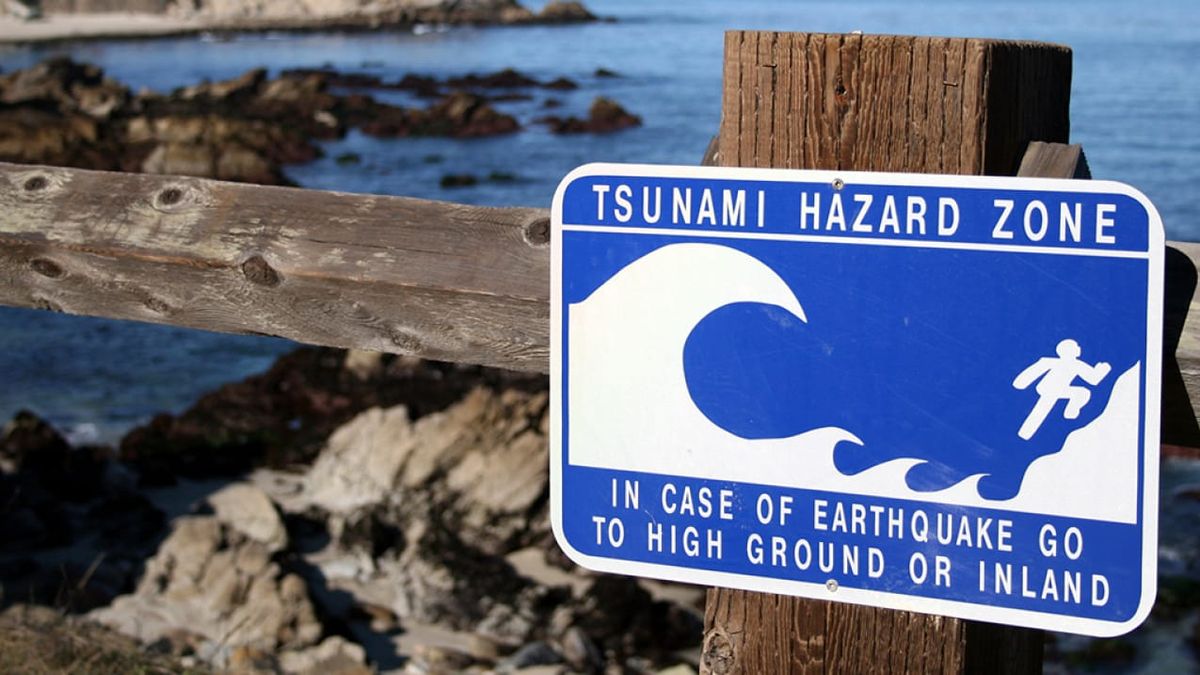
Much like a sailor can never really leave the sea behind, I’m watching snug, but not smug, in my lighthouse, looking for what we can do better and differently for future disasters. I still love the ocean, but I am thinking most about how we can better understand the hazards, develop warning systems, and choose evacuation zones for those most at risk of being affected by the effects of AI.
Section 174 was the wave that already hit. Form 6765 is the one still gathering, the documentation reckoning coming for everyone who skipped the messy, narrative work of figuring out why they built what they built. I’ve written about why that makes visioning, of all things, a tax strategy.