The Compound Bow: Why Visioning is Now a Tax Strategy

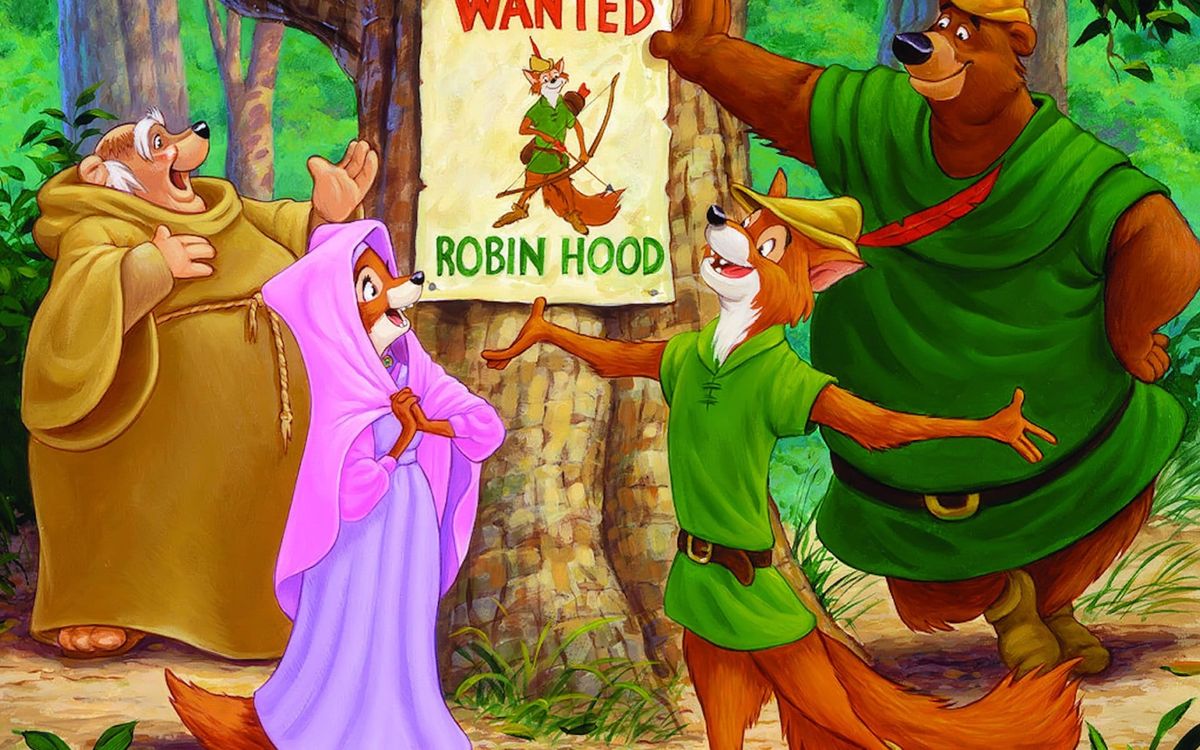
When I was a kid, I was obsessed with the 1973 Disney animated Robin Hood. Specifically with Robin himself, that improbably charming fox who could split an arrow at impossible distances even disguised and wearing stilts. I was enthralled by him, but I did not want to be Maid Marion. I wanted to be Robin Hood. What I had was wooden bow I made with a stick and a string. It shot my improvised arrows approximately four feet.
My dad always invested in my enthusiasm, so he got into archery with me. We set up hay bales with targets in the backyard, and he bought me a real compound bow; camo finish, with gold arrows fletched in black and neon orange. I understood instinctively that pulling back harder on a longbow sent the arrow farther. That made physical sense to me. What mystified me was the compound bow’s mechanism: that extra loop of cable and pulley, the cams at each end, the way the draw got easier at full extension rather than harder.
The stored energy in that system sent my gold arrows singing across the mountain air with an accuracy and distance my toy, or even a traditional longbow at my age and strength, could never have matched. The counterintuitive thing was true. Pulling back further, with the right equipment, made the arrow fly truer.
I have been thinking about that compound bow a lot lately, because the software industry is standing in a field littered with shitty plastic bows wondering why nothing is hitting the target.
Taxes, Taxes, Taxes
LinkedIn these days feels more like the jail scene in Robin Hood with Roger Miller’s soulful tune “Not in Nottingham” than like the bopping intro to the movie… The Sheriff of Nottingham, if you’ll recall, was primarily a tax collector. 2026 is where the Sheriff’s ledger starts working in our favour, if we’re paying attention.
I wrote last year about how Section 174 of the US tax code broke the tech industry’s incentive structure: how a 2017 tax law change that took effect at the end of 2022 suddenly required companies to amortise R&D expenses over five years instead of deducting them immediately, triggering the cash flow crisis that masqueraded as a sudden loss of faith in designers, researchers, and anyone who got paid to think slowly (if deeply). If you haven’t read that piece, it’s linked here.
The short version: it wasn’t you. It was a wonky tax provision and a collective financial panic attack.
The layoffs were real, the whiplash was real, the “year of efficiency” rhetoric that dehumanised entire disciplines was real. And continues to be real. Despite changes to Section 174 in 2025 the industry has rolled right into layoffs triggered by AI (or more likely mismanagement masquerading as AI efficiencies.)
The One Big Beautiful Bill Act, signed into law on July 4th 2025, restored immediate deductibility of domestic R&D expenses (though not international). The financial incentive to claim R&D credits is back, and it’s substantial: credits worth 6-10% of qualified costs, applied dollar-for-dollar against tax liability. For startups, up to $500,000 can offset payroll taxes directly.
Proposed changes to Form 6765, the form used to claim R&D credits, now require companies to provide per-project documentation: what you were trying to discover, what technical uncertainties you faced, what alternatives you evaluated, what your process of experimentation actually looked like. As CLA Connect’s May 2026 analysis of the changes notes, this level of detail has historically not been required on Form 6765, which previously only asked for quantitative data like costs and election choices. And for tax year 2026, documentation won’t be optional.
This matters to those of us who care about the snarl of process used to build software today. Previously, a company could claim R&D credits with numbers. Now they need narrative. That is not an accounting question. That is a design and strategy question and most teams have no idea they’re now responsible for answering it.
The four-part test for qualifying R&D activities requires you to demonstrate permitted purpose, technological uncertainty, a process of experimentation, and reliance on hard science. That’s not a checklist you fill out after the fact. It’s a story your work has to be able to tell about itself; a story that has to have been true while you were doing the work, not reconstructed in a conference room the week before filing to sum up a plethora of uncoordinated commits. Court cases, including Little Sandy Coal v. Commissioner and Phoenix Design Group v. Commissioner, have made clear that the IRS will scrutinise exactly this: whether the documentation reflects genuine inquiry or retrospective invention. Vibe coding does not generate that narrative.
Even tax professionals are struggling to map this new reality to the documentation requirements. In January 2026, KPMG tax professionals Ajay Wanchoo and Hogan Humphries published an analysis in Tax Management Memorandum examining exactly this question. Their conclusion was careful and honest: there is currently no IRS guidance or case law addressing vibe coding and R&D credit eligibility. The regulatory landscape, they wrote, “currently lacks clear guidance or precedent on these practices.” They proposed that disciplined, human-led AI-assisted development could qualify if teams document architectural decisions, reframe bugs as failed experiment logs, and treat pull request discussions as evidence of human intellectual leadership. Their automotive crash test analogy might seem rational for those outside software: the AI-generated design is the hypothesis, the load test is the experiment, the bug is the disproof, and the debugging process is the qualified research activity. But the sense ends there.
Automotive engineers do not crash test cars with real passengers. The hypothesis is defined before the test. The experiment runs in a controlled environment. The crash dummy is not a human customer.
Treating a rising bug rate as evidence of experimentation only works if you abstract away the fact that the system is running on real infrastructure affecting real people. A bug in a prototype chassis hurts nobody. A bug in a medication dosing interface, a banking transaction, a health insurance referral, is a different category of event entirely. Enshittification is real, and its costs are not evenly distributed. Being unable to pair your phone with a car stereo is an annoying bug. A misfiring algorithm in the systems managing our healthcare, banking, and communications is something we should be a great deal more careful about calling research.
And before anyone argues that token costs make this approach too cheap to matter vs possible tax credits: that’s a temporary condition. AI infrastructure costs are currently subsidised at a scale the market will not sustain indefinitely. When token pricing aligns with actual costs, the economics of generating thousands of lines of undocumented, unexamined code will look very different.
Fortunes Forecast, Lucky Charms
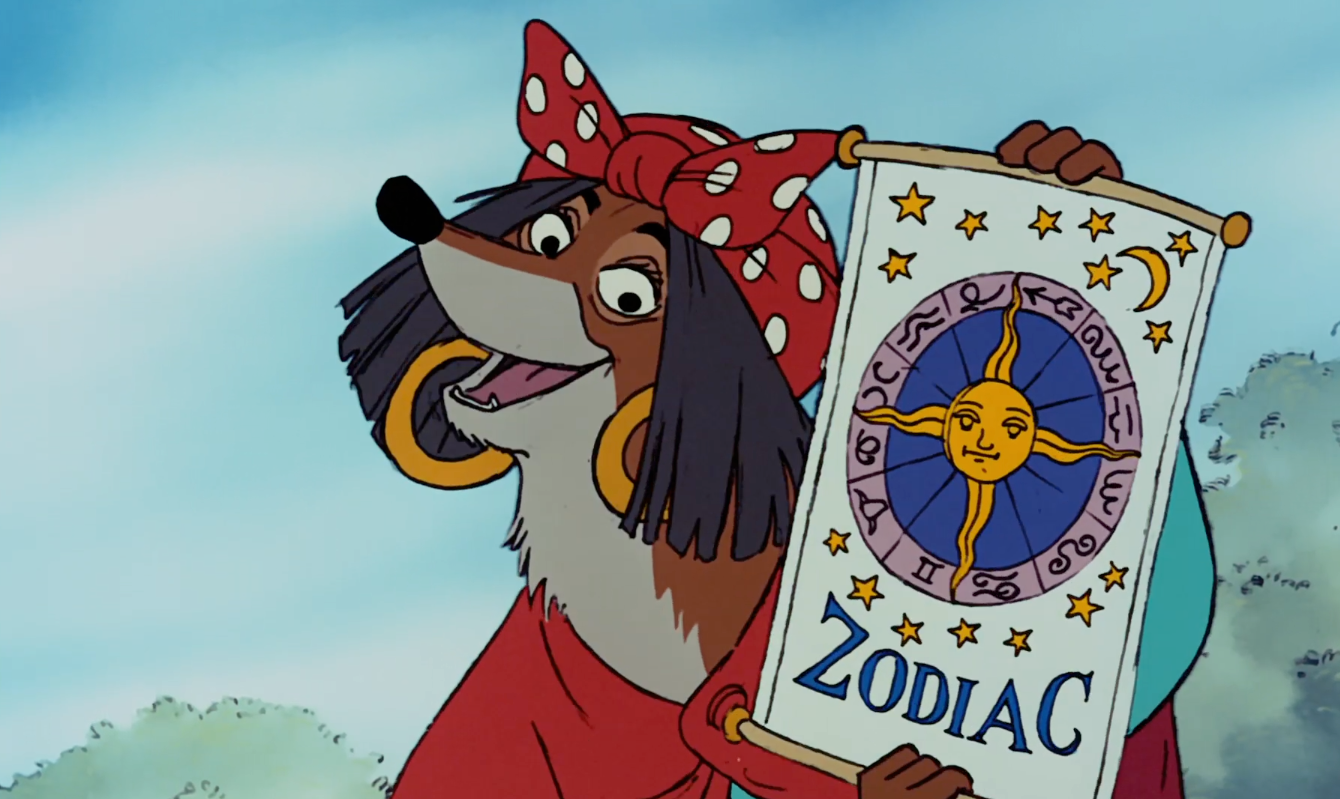
So, we see that a different type of documentation is now required to claim R&D credits on Section 174. But we have not talked about what companies need in order to outline and show what they were trying to discover, what technical uncertainties they faced, and what alternatives were evaluated, and what the process of experimentation actually looked like. You need a foundational vision tied to the strategic why before you get to the what and how.
A cheeky scene in Robin Hood is when Robin and Little John disguise themselves as female fortunetellers to rob Prince John. They steal his jewels as they pander to his ego and tell his fortune while hovering over a globe filled with fireflies. These days I feel like product leadership treats longterm planning like a pointless exercise akin to fortunetellers peering into a crystal ball.
This is getting futures methods all wrong. There is no singular future we are trying to predict. There are a multiplicity of futures which may come to be: the most likely, the worst, the best, and so on. The point of visioning is to decide what you want to bring to fruition and what you want to avoid. When built into your process as a continuous exercise visioning doesn’t slow you down. It stores energy like the compound bow. It is the mechanism which enables the arrow to fly further and truer than your current strength alone could manage.
Most of these organisations are trying to shoot arrows with equipment that requires a kind of strength they systematically defunded between 2022 and 2025. Visioning is a muscle. Post-efficiency-era tech organisations that cut that muscle out and called it fat are going to regret that choice.
Here is what I want you to take to your next budget conversation, your next board meeting, your next argument with a CFO who thinks design is a cost centre, in particular one that is irrelevant in the age of AI: Companies that develop the visioning muscle and have a process for documenting the early, messy phases of design will capture 6-10% of qualified R&D costs in tax credits they can actually defend under audit.
Product teams who use futures methods will build software that requires less rework because they documented how they understood the problem before they tried to solve it. They will retain the kind of people who leave environments that treat them as prompt jockeys. They will produce products that respect users enough to model their actual world rather than a product manager’s assumptions about it.
None of these outcomes have to be in tension with each other. The compound bow serves the shareholders and the humans with the same arrow. The best process isn’t just bureaucracy: it’s a mechanised advantage, success codified. The IRS, entirely by accident, is now requiring corporate America to do what good designers have been asking for time to do properly for years: document the uncertainty, name the experimentation, treat the work as genuine inquiry.
I am not trying to predict the future the tax code wants us to inhabit. I am visioning the future we want to bring into being. One where software is built with examined thinking, where workers are treated as the thinkers they are, where users are respected, and where the audit trail is a natural artefact of doing the work properly rather than a panicked reconstruction of work done haphazardly.
Robin Hood was one of the first films my parents purchased for our VHS. I watched it over and over again. At the time I was obsessed with being Robin Hood. But over time I have come to see myself more as Alan-A-Dale, the rooster with the lute who starts the film with that earworm of a whistle and acoustic combo. He introduces himself as a minstrel, explaining “That’s an early-day folk singer. My job is to tell it like it is, or was, or whatever.”
Me too, Alan-A-Dale, me too. But I’ll add that my job as a narrative futurist is most importantly to tell it like it can be and should be.
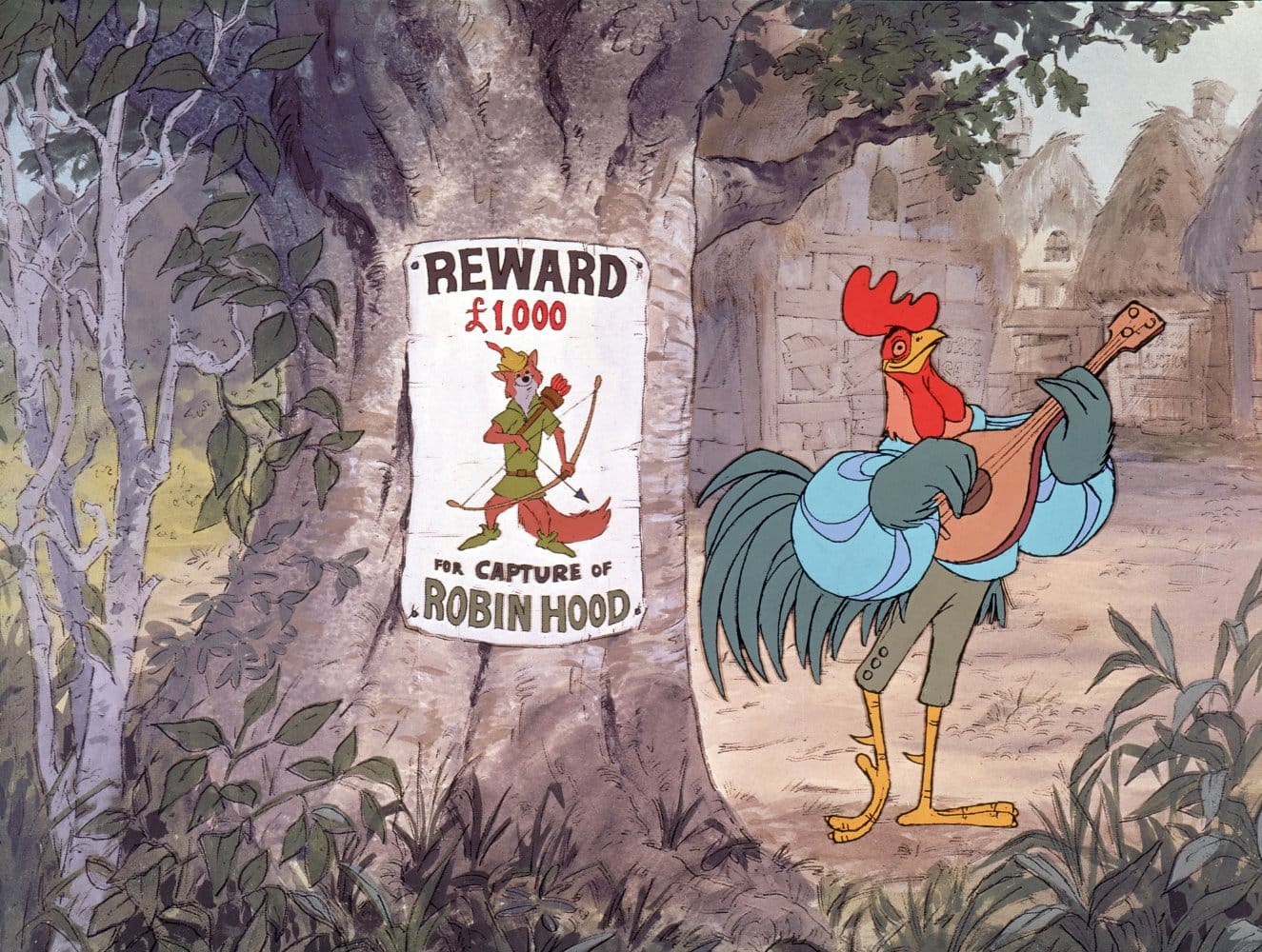
All screen captures are from Robin Hood, directed by Wolfgang Reitherman (Walt Disney Productions, 1973).
For detailed guidance on the Form 6765 changes and Section 174A relief, see CLA Connect's analysis: The R&D Tax Credit & Deduction: Watch for Major Tax, Filing Changes (May 2026).
For the KPMG analysis of AI-assisted development and R&D credit eligibility, see Ajay Wanchoo and Hogan Humphries, “AI Reshapes Software R&D Tax Credits, Eligibility Landscape,” Tax Management Memorandum, January 23, 2026.
Caitlin Steele is a design strategist. She holds an OOUX Certified Strategist credential and is completing an MSc in Narrative Futures at the Edinburgh Futures Institute. She writes about the intersection of design, strategy, and the systems that shape how we build things.