Are we human or are we dancer?

In February of 2022 the core leadership of Trello all gave notice on the same day: the CEO, Head of Product, Head of Engineering, and Chief of Staff. In the meeting where we discussed communications plans, how all 300 employees would learn about this announcement, one of those leaders said to us, “You don’t know it yet, but these are the good old days.”
I think about that statement a lot. 2022 to 2025 was a wild ride for me across Trello, Jira, Confluence, and GitLab. In retrospect, grief fueled my burnout.
I took a year’s break from design leadership to work on my MSc in Narrative Futures. But in taking that space, I have recouped the energy and desire to improve how we work. Kicking off my re-engagement with the industry, I spent several days this week at the Hatch Leadership Atelier in Amsterdam.
With four dozen fellow design leaders present, the conference was small overall but also broke out into more intimate sessions with around 8 people. The discussions were candid and grounded in the challenges design as a discipline is facing now. We were in one of these small peer sessions when someone brought up the song Human, by The Killers. Specifically, the chorus: are we human, or are we dancer? Several people started humming the tune or nodding while repeating the chorus. It clearly resonated.
Brandon Flowers states that Hunter S. Thompson inspired him and supposedly said, “America is raising a generation of dancers, afraid to take one step out of line.” The source of attribution is unclear, but either way, Flowers turned it into a question, which is more generous than what Thompson may have intended.
Since I left the conference, I catch myself humming the chorus of that earworm as I work to synthesise all the things I absorbed. I took notes on the posters and cards from Day 1 which were hung on the walls on Day 2 for us to read. After Design/Designer, the top term mentioned was Fear; I counted it at least 24 times.
The overall themes reduce to these:
Who am I?
Role/Designer, Identity, Human
Is the work produced with AI worth anything?
Value, Quality, Design, Governance, Strategy
How do I feel about AI?
Fear, Change, Leadership, Team
Nothing good happens amid identity threat. No one wants to ship work that makes them cringe. Reacting from a place of fear prevents sound decisions.
AI has sparked an existential crisis for an entire industry. It forces us to question everything about how we have been working and how we will work, but the underlying question on so many minds boils down to “who am I in a world with AI?” As designers, many of us found a role we conflated with our identity, expressing the entwinement through our appearance, aesthetic sense, and worldview.
“If I am no longer the designer, who am I?” is not a question answered by running a roles and responsibilities play or writing a job description with builder in the title. I may not have a definitive answer, but I can see the shape of it. Conceptual models for mortals are one of my strengths, using stories and analogies to help us make sense of the world. I will mix my metaphors and maybe stretch the boundaries of narrative here, but let’s start with ballet…
We Trained for Swan Lake
I came into software during UX Design’s classical period: we synthesised learnings from the fine arts and spun them into methodologies, systems, defined roles, deliverables, and handoffs. We fought for, and we thought won, the right to our seat at the table by justifying our value. This notation, now viewed as just bureaucratic, made invisible thinking legible. It protected the work. But during this time our passionate efforts turned Designer-as-job-title into designer-as-identity, setting an existential trap.
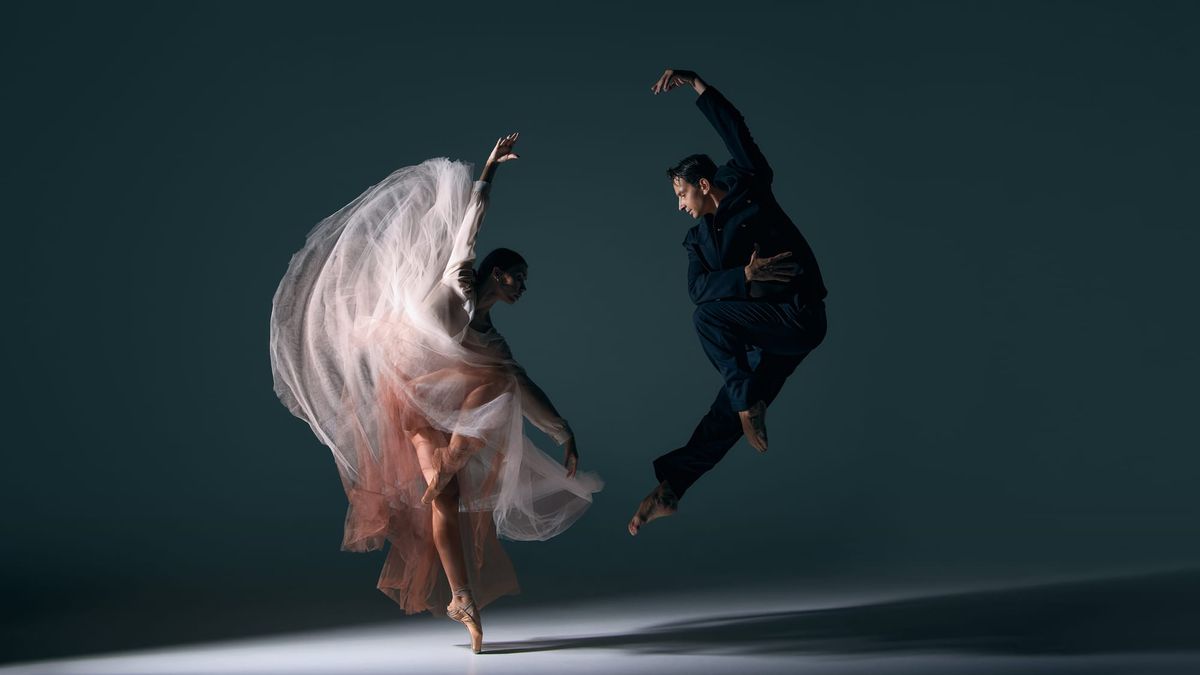
In my ballet analogy, we as designers owned the stage and engineers owned the orchestra pit, and an entire crew of operations and business humans ran the theatre where we performed. We put on one hell of a show over the last half-century. The choreographer wrote the design system, the principles, the methodology. The composer wrote the product vision, the narrative of what the thing was supposed to be. The principal dancer was the lead designer, making the interpretive calls. The dancing corps was the design practitioners executing in precise synchrony in the background. The conductor held the tempo as the product manager, keeping sprints, ceremonies, and cross-functional relationships in time. The metronomes were the developers’ tools and our prioritization frameworks; the score was our Figma libraries and our handoff specs.
While the audience watched the dancers, the engineers supplied the music for our leaps and twirls. Everyone trained for years to occupy the most competitive roles; they knew their position. The show was beautiful when it worked.
Then the black swan event of AI hit mid-performance. The music stopped with a chaotic crescendo, like an elephant running through the orchestra pit.
Swan Lake is itself a black swan story: Odette and Odile, the authentic self and the performed self, played by the same dancer. Taleb borrowed his black swan from ornithology, not Tchaikovsky. But the ballet and the theory arrive at the same place. There are many people who can say they predicted what is happening now, but I don’t think any model fully accounted for all the second and third-order effects we are seeing. Regardless, the stage of software creation has turned from a classical ballet into a Black Mirror vaudeville show where some people are trying to keep dancing as if nothing has changed, whereas others are dancing to music only they can hear.
Everyone’s Improvising (But Is It Jazz?)
I know former designers, engineers, and product managers who have become solo performers, releasing their own apps which range in quality from Brian Eno to the one-man-band at the town square with the instruments harnessed to him, bells on his ankles, harmonica around his neck, beating his big drum as he dances.
The classical structures of design and engineering are dissolving if anyone can ship, prompt, generate, and “design.” Some call this democratisation. Some call it chaos. Maybe we should call it improv, with an eye on jazz as the progenitor of musical improvisation. In AI-native companies people seem to relate to AI like a drug and are riffing away, scatting at speed. In many established orgs people are singing the blues, because their leadership is forcing them into the age of AI against their will, mourning what has changed, or they are eager to get into the club of AI and their security or compliance teams are bouncers who won’t let them in the door.
Blues and jazz are Black American art forms that the post-colonial world appropriated, which is fitting as AI is the latest in a long history of extraction and appropriation of creative intelligence. As a genre, blues is about bearing witness to pain in a repeating structure until it transforms: state it, restate it, find the way through. It is an art form that processes grief.
I’m not apologising for the white artists who thrived by stealing from the black artists robbed of the success they deserved, but I will say that the artists who survived that extraction kept composing because their identity lived in the creative act of making, not the owning of the form.
The anonymous cards I read, taped to a wall at the conference, showed that not all but many design leaders are experiencing the blues… not panic, not paralysis, but the grief of people who are mourning and have not yet found the turn in their tune. It is hard to improvise from a place of heartache. When I left design leadership at GitLab in 2025, it felt more like a John Lee Hooker performance than anything from Tchaikovsky.
I know blues far better than jazz, but my friends who understand jazz convey that it runs deep in theory. Jazz took the blues feeling and exploded the structure with a blend of intention and intuition. Miles Davis knew every rule he was breaking. Classical mastery formed the foundation for Martha Graham’s rupture in dance, and she had earned the right to subvert it. The people I see doing the most impressive work with AI are the creatives who feel unleashed, gaining understanding through improvisation vs the ones who produce work that carries a tune at first listen but on deeper examination comes off more like a saxophone-synth with auto tune built in.
A design leader who spoke at the conference said one of his favourite designers studied fashion in undergrad. He loves her prototyping with abandon; she doesn’t limit herself because she doesn’t know any of the rules. I don’t know her work, nor do I want to disparage welcoming her to the fold, but I must wonder if some new designers are entering the improvisational design era without practicing against constraint the way the modern dance and jazz legends learned.
Constraint breeds creativity versus limiting it.
I came to software mid-career and from a non-traditional route with a degree in Writing, Literature & Publishing, with little formal design training. But I leaned hard into learning and repetition, because I knew from poetry that the rules I was breaking needed to be understood before I could break them well. I don’t doubt some of these builders are inventing fresh forms we have never dreamed of, but there is a risk that’s just noise. Our users and customers are the audience who gets to judge that, not the leaders looking to dazzle the board.
Composers and Conductors vs. Creatives
So, what do we do with this tired troupe of dancers and musicians? AI is offering to make their jobs easier, sometimes taking that “help” to train itself to replace them. I think Pandora’s box is open and there is no forming a union to guarantee the orchestra live performances for every show, though my friends joining tech unions beg to differ. The robots trained on the moves of dancers get better every day. Companies need to reckon with the fact that their users may hire agents to attend the matinee and report back. Do we even need concert halls anymore if it is just a stage of robots pirouetting to electronic music recorded by a sea of automata? This quote from one of the anonymous cards sums it up: “Why do we, in a world that is struggling with loneliness and human contact, allow (ourselves) to be replaced by AI?”
With so many things, I think the truth lies in the middle. If you want experiences which humans will show up for, or maybe even take part in theatre-in-the-round style, we need an element of humanity. At Seattle Rep, I saw a performance of Islander, a haunting play about families leaving islands in the Outer Hebrides as they become ghost towns. The cast was two women playing all the roles, using a synthesiser to loop music and voice, layering tracks repeatedly, building up emotive and ethereal textures. I can’t articulate how human and intimate that performance was, aided by technology as a tool to execute their vision.
Maybe instead of “are we human or are we dancer” it is “are we composer or are we conductor?” I don’t want to trivialise the role of an orchestra conductor; it is an extraordinarily skilled vocation involving interpretation, timing, and holding the ensemble together. But the conductor is in the service of the composer’s vision.
Orchestration is already the language of the AI era: agentic pipelines, agent coordination, assembled outputs, etc. The question the industry is not asking loudly enough is who writes the scores that those agents are playing? This isn’t a seat at the table. There is no more table. In one session, David Hoang invoked the image of a caged tiger, an animal whose territory in the wild spans hundreds of miles, still pacing the same worn path in even the largest enclosure. The pacing isn’t nostalgia for a smaller cage; it’s what happens when the space on offer has never matched the animal’s actual range.
In a strange bit of synchronicity, in The Killers’ music video for Human they show a white tiger when he sings, “And sometimes I get nervous when I see an open door.” Too many of us have composer capacity, and people ask us to conduct, or worse, we remain in the small area that caged us even when the bars are gone.
Design was always a mindset that certain creative people held job titles for, a mindset that got codified down into a series of steps and methodologies. AI isn’t removing design; it’s removing the title’s monopoly on the mindset. If your identity lives in the title, this is terrifying, but it can be liberating if it lives in the thinking. That freedom only arrives if we’re willing to own the space upstream from implementation: the score, the vision, the narrative.
What’s the Score?
To some observers, modern dance and jazz seemed chaotic, but the forms eventually each coalesced into their own new foundations, such as new pedagogical approaches and novel forms that were teachable and expandable. Dance and music are continuing to evolve, why can’t we? The creatives who understand why the notation existed but are open to how we work are the ones positioned to compose what comes next.
I’m not so naive that I think AI will go away as suddenly as 3D TVs or NFTs, though costs are going to change how ubiquitous it is in products and workflows. I view it as a technology we have no choice but to encounter; we must choose if and how we use it. Regardless, the experiences we compose need narrative and vision to shape what we create collectively.
By Day 2 of the conference, the design leaders who started from a place of fear shifted to a sense of agency. We have work ahead, but conviction in our ability to respond versus react changes the timbre of the story we are shaping.
The Killers asked: are we human or are we dancer? We are human, no matter what we do. “Are we composer or are we conductor?” is choosing between two jobs. Both are roles someone holds. But what I’m really asking is something deeper than that: not what you do for work, but how you exist. Creativity, like our humanity, is a frontier which requires synthesising our interior and exterior worlds to bring new things into being. “Are we creative or are we designer?” is the better question.