How to Write Your Future
As I sat down on the train in Figeac on the way back from Camp Chateau on Sunday, I opened a text edit file and put on my We Can Do This playlist on shuffle and the first song was “Fear the Future” by St Vincent, which was a bit of kismet for writing this article.
I’m not making this shit up. I got goosebumps as she sang:
Come on sir, just give me an answer
Come on sir, now I need an answer
...
Come on sir, just give me the answer
The song ends with the words “I fear the future,” a feeling which resonates deeply.
Don’t we all want answers about our futures?
Over the past year, my husband and I have been in visa-limbo, waiting to find out if we could stay in the UK. I have referred to this time as marinating in liminality. We know we have to leave (I am on Friday!) but there are still so many unknowns.
It feels hard to take any action in that fog of uncertainty.
As a narrative futures practitioner, I spend an inordinate amount of time thinking about the future, that indefinite time ahead yet to come. And I talk a lot about how our futures are stories we have yet to write, how we have agency to create our futures. I have been using these skills on Fortune 100 software products or with net-new startup founders, but I have never used them with a group of women before, until now.
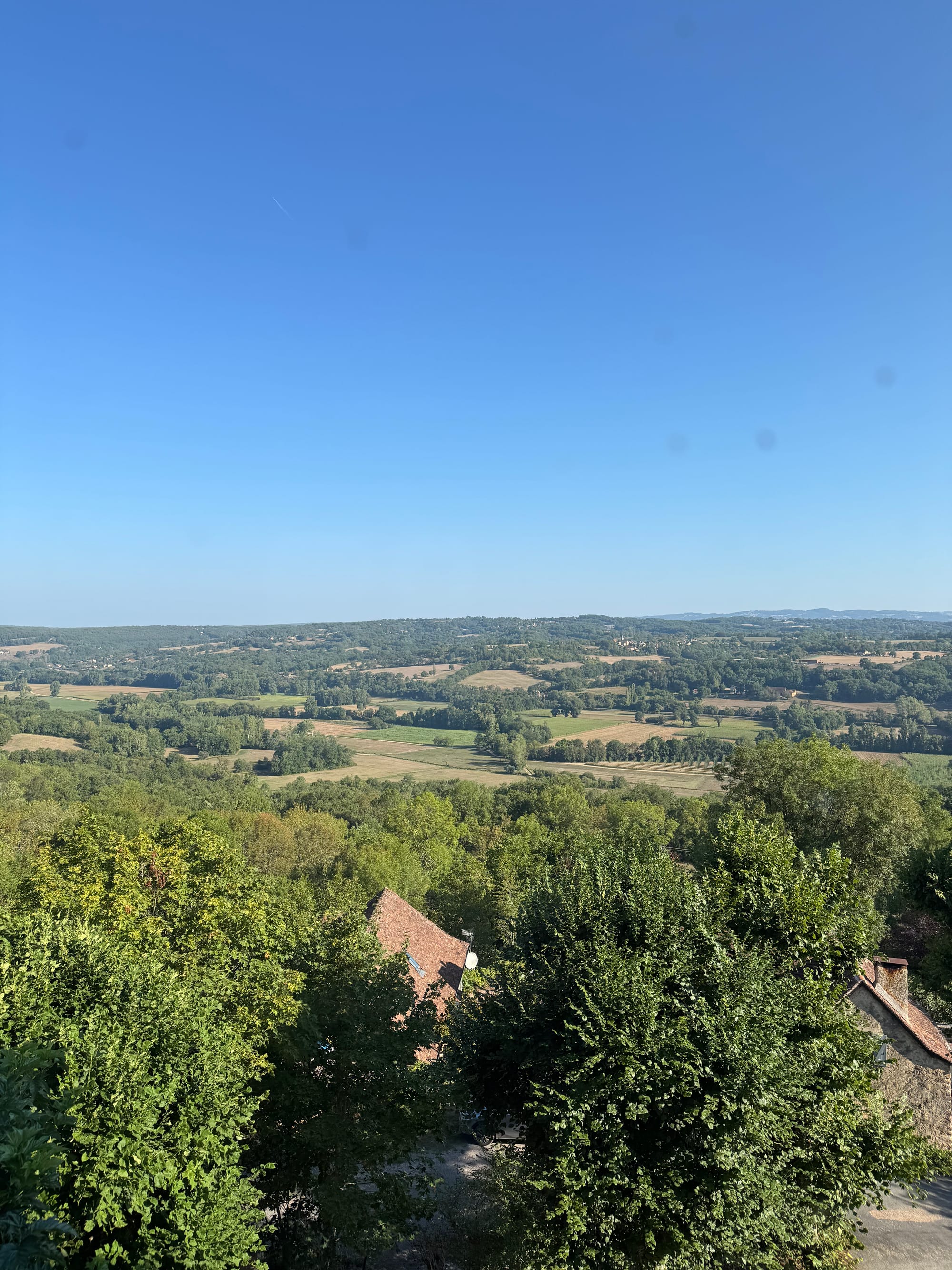
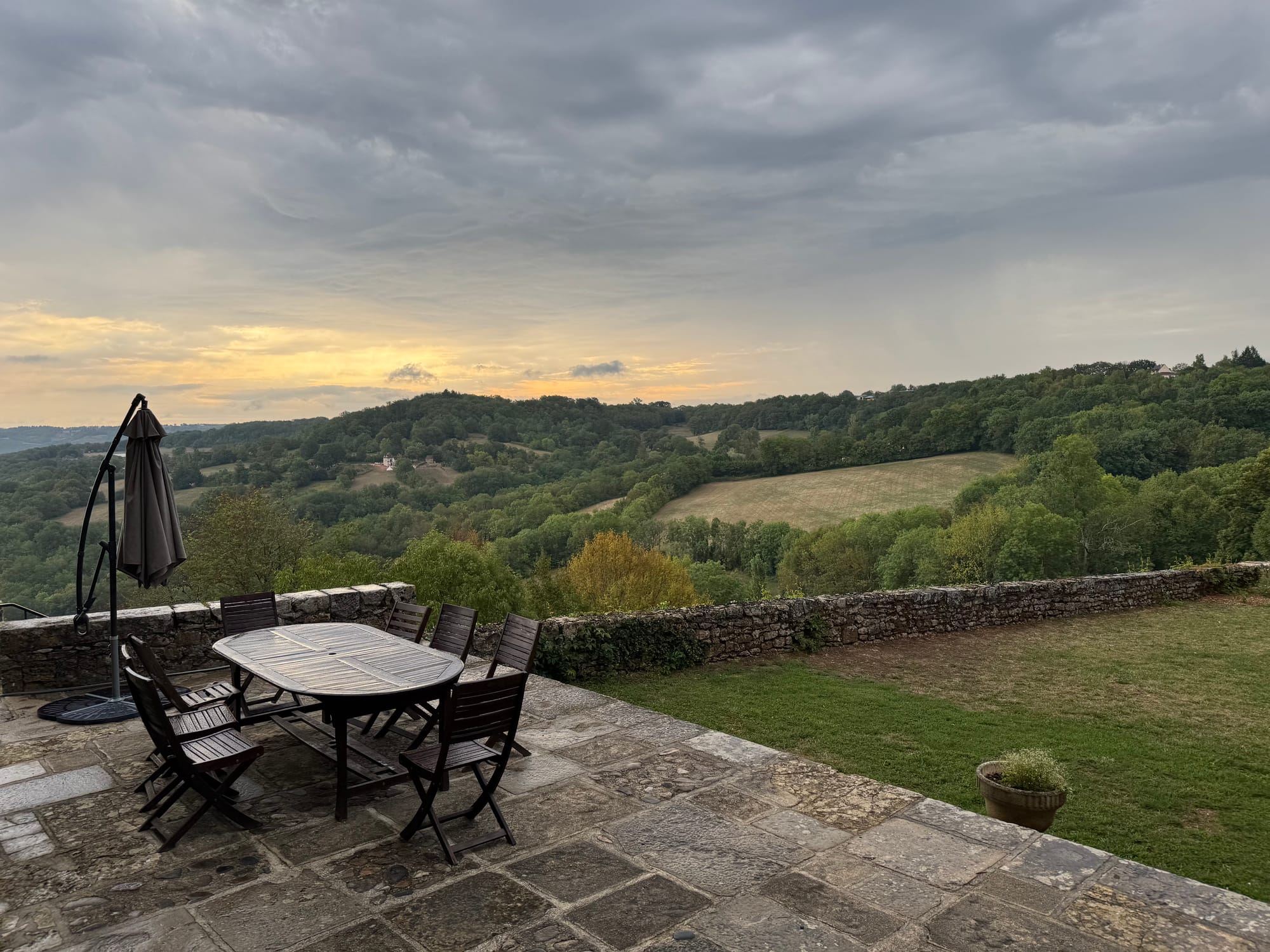
Chateau Beduer sits resplendent on the crest of a craggy hill overlooking a lush river valley in Southern France. Camp Chateau, founded in 2022, offers women a refuge to escape their busy lives and rediscover the simplicity of summer camp, albeit as adults and in a sophisticated setting. It was a vision brought into existence by Philippa Girling, Leah Lykins, Lynda Coleman, and a crowd of women investors.
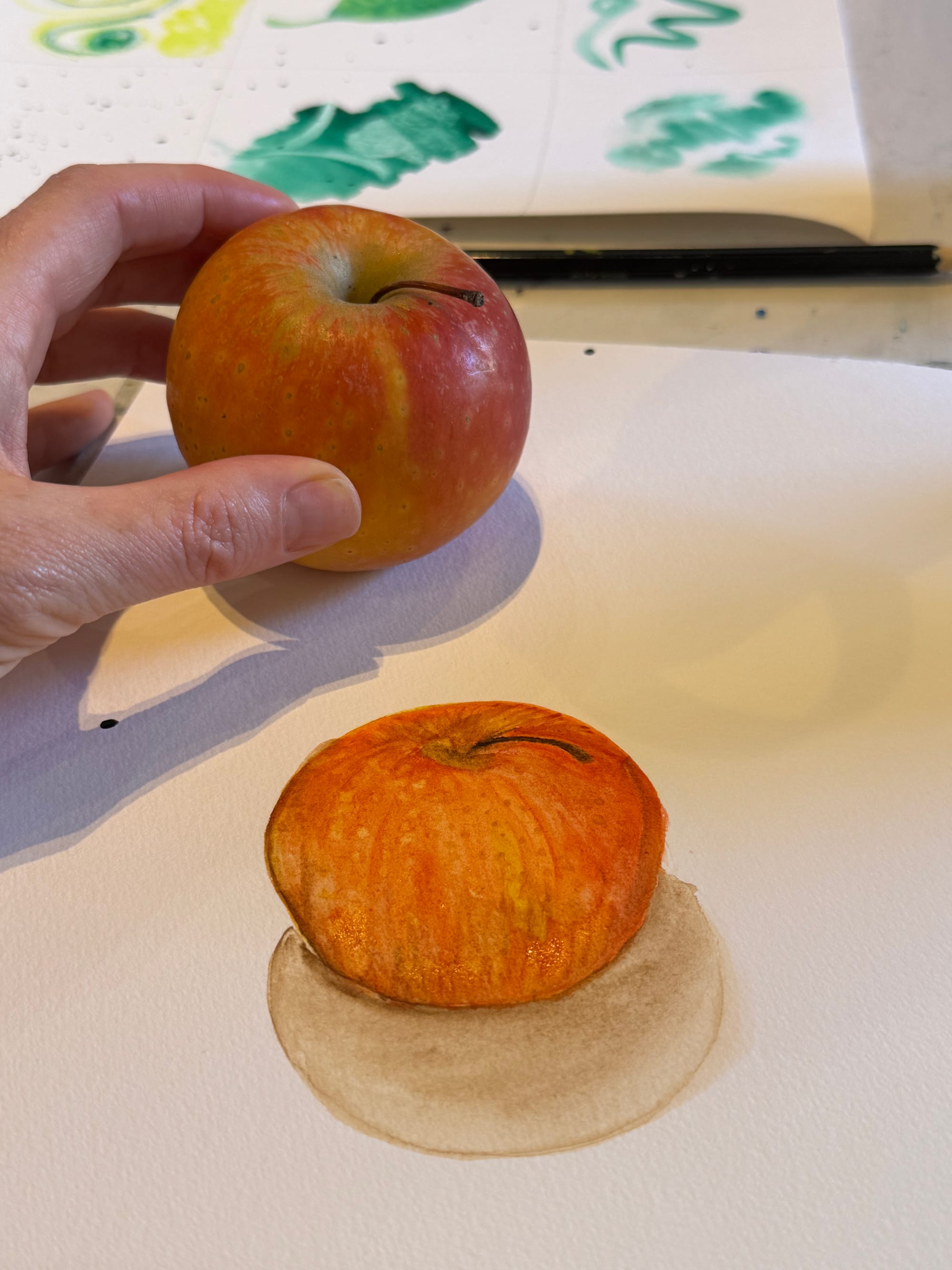
I am not proud of how proud I am of my FIRST real attempt at watercolour.
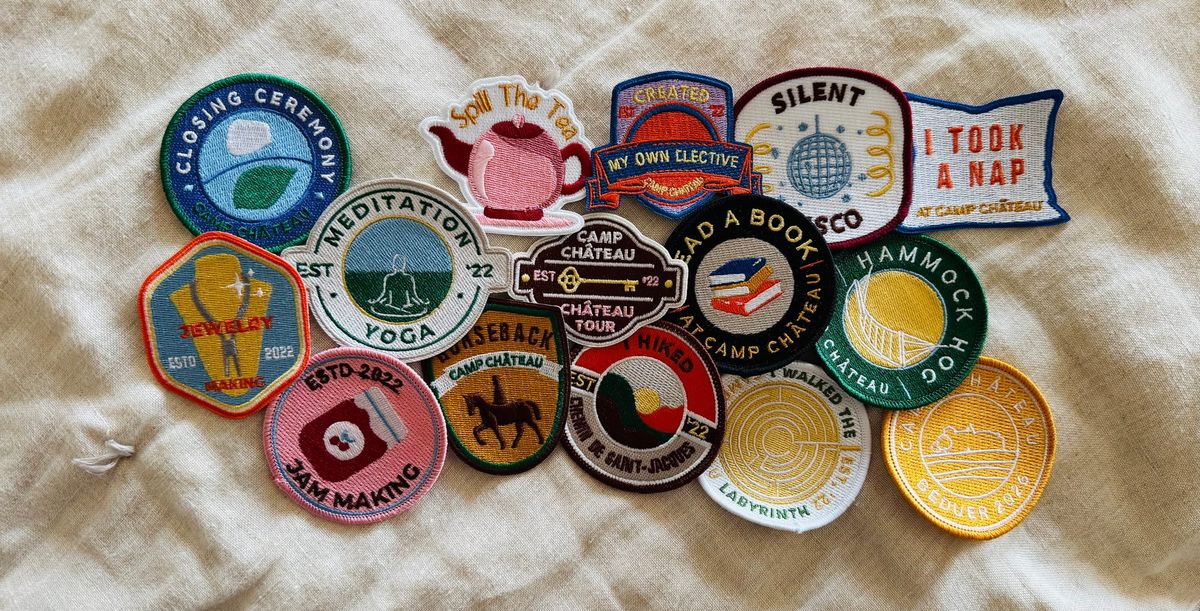
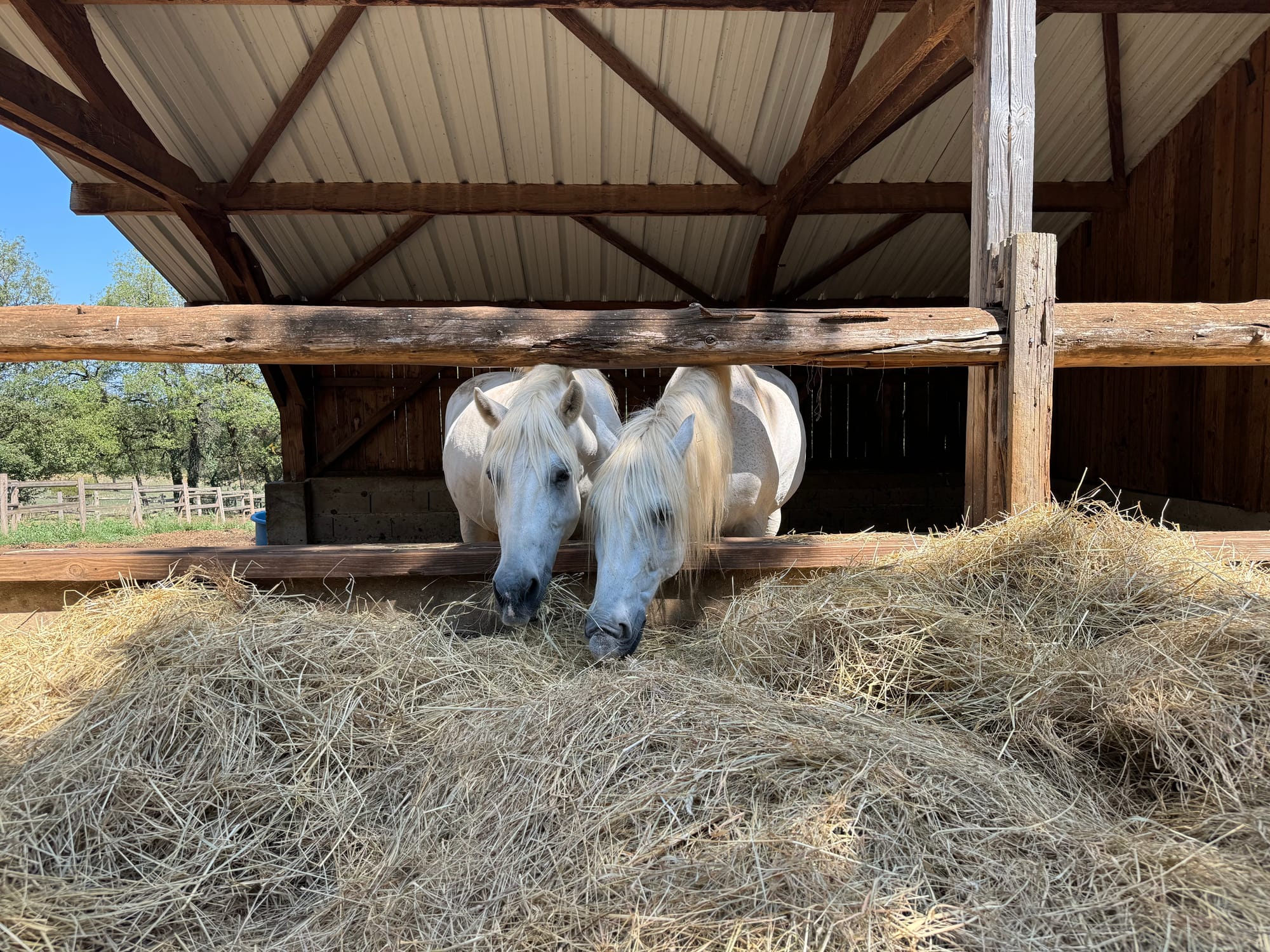
Over the last week we took electives such as morning yoga, jam making, embroidery, horseback riding, and kayaking. Each day we were fed physically with beautiful French cuisine and spiritually with crafts, movement, and rest. Badges were not reserved for structured activities, but also earned by napping, hogging a hammock, or lazing by the pool. We could choose how much or little we committed ourselves to do.
At the opening of camp, the director Erica invited us to propose our own sessions. I did not even consider it at first, but the second evening I joined an event called Spill the Tea. The opposite of unsolicited life advice, it was a structured, intimate circle where we contributed wisdom in response to anonymous questions.
We wrote what we wanted help with on a note, and the moderators Erica and Madison pulled them out of a tin to talk through one at a time. Aside from the beautiful and thoughtful answers offered, what I also I noticed was how many of the questions related to uncertainty: Should I have kids? Should I freeze my eggs? Where do I take my career? What do I do with my finances? Some asks were practical, but the bulk of them were from women struggling, unsure how to make a key decision.
And that is when it occurred to me that maybe I could offer an elective. What if I could use my futures work to teach how to turn uncertainty into personal clarity? I immediately questioned my decision as soon as I posted it. What do I have to teach? How could I pull together something in less than 48 hours while busy with activities?
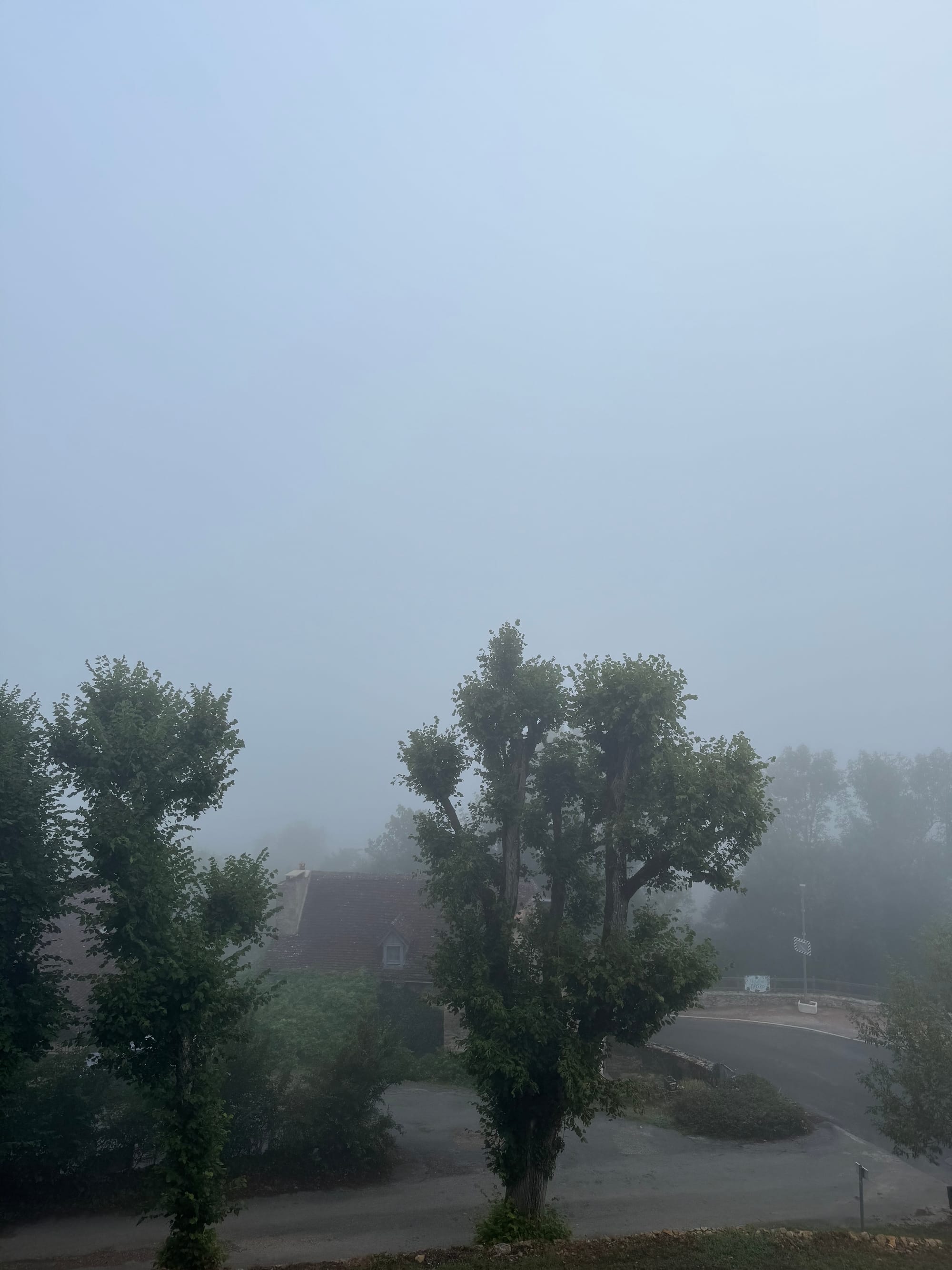
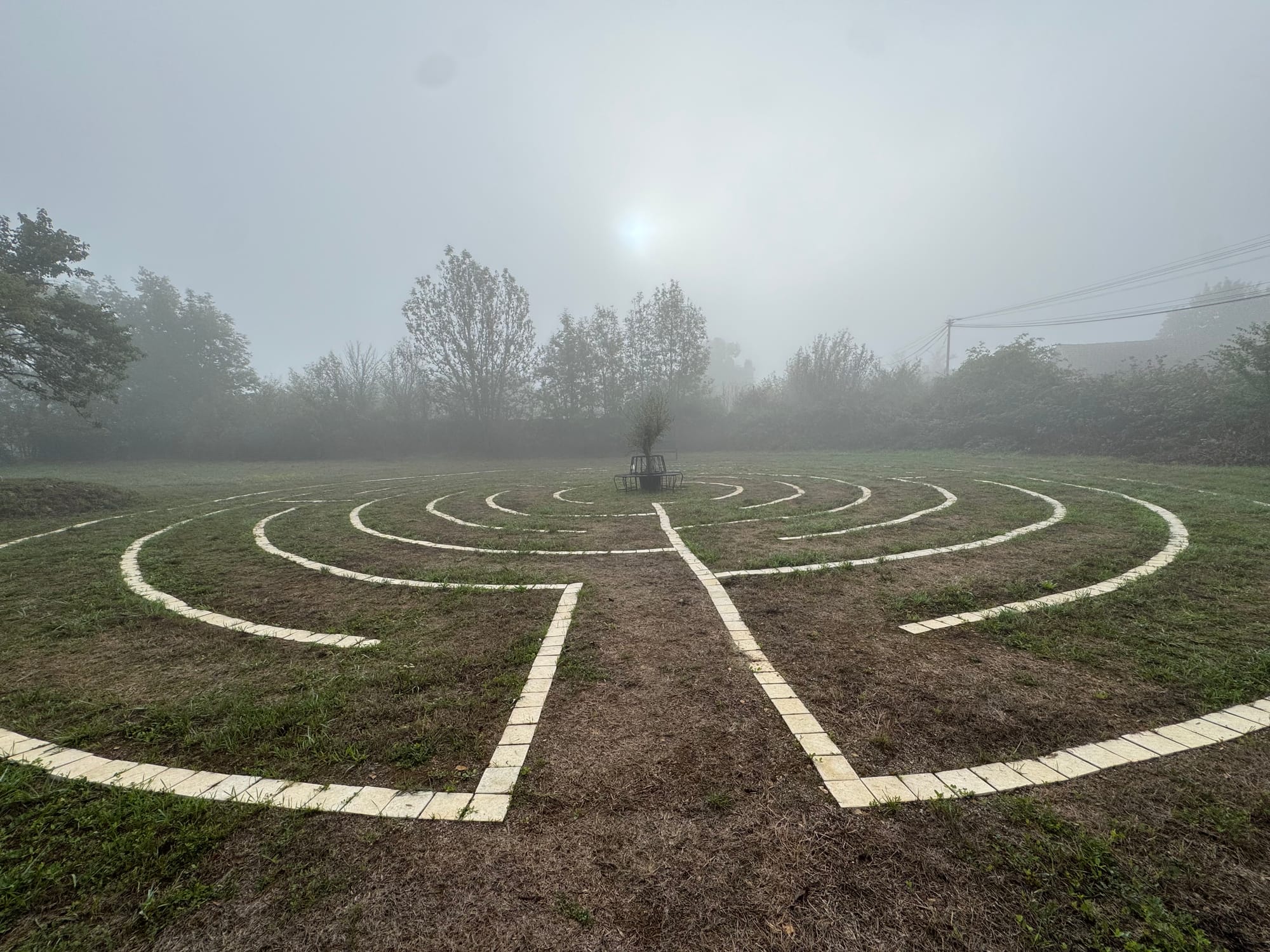
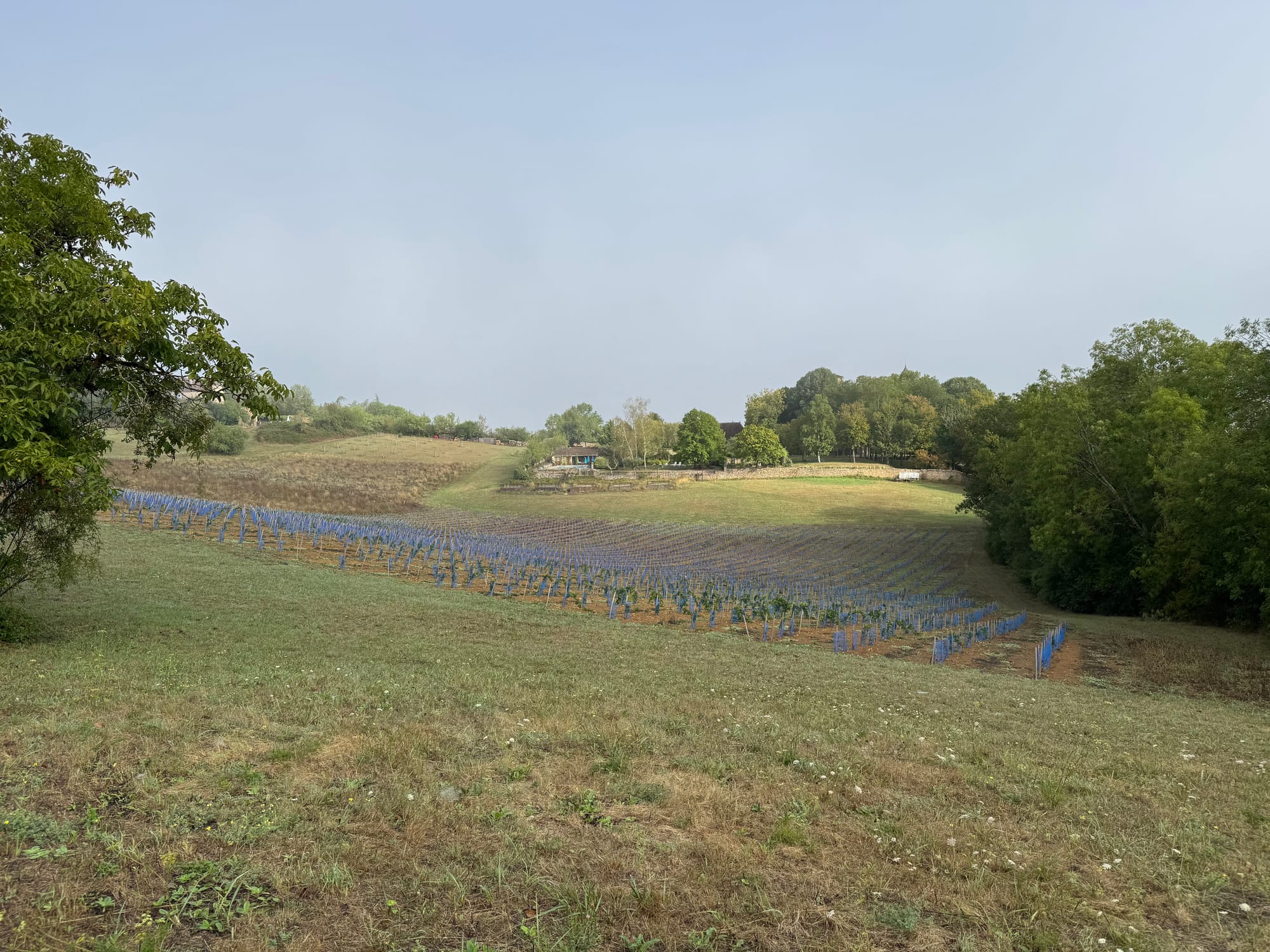
I skipped the Saturday morning market trip (my choice) and had until 4 pm that day to pull together a talk about futures thinking and a writing exercise. Starting with a foggy morning walk, I trekked out to the stone labyrinth, unable to see the vineyard or distant vistas. The heavy moisture in the air obscured everything, making even the most innocuous shapes loom out of the mist.
Pacing through the tile and grass maze, I worked out what I would say, what we would do, and what I wanted the session outline to be. When I finished, I felt compelled to walk it a second time, looping the exterior once clockwise before starting again.
This time I processed how many women had expressed interest in my event, saying they were sorry to miss it for the sound bath or kayaking. I wondered if maybe my business plan for Thoughtful Apes was missing a track for individual futures work.
When I exited, I walked around the exterior counterclockwise one last time. As I paused at the entrance to take a photo, the sun chose that moment to break through from the clouds, and it felt like the perfect metaphor for how my work brings people clarity.
By the time I walked back through the orchard and approached the chateau, all the fog had burnt off. I knew exactly what I wanted to offer my attendees.
I have written up below the brief talk and exercise for anyone interested in running it on their own.
How to Write Your Future: The Talk
Over the past year, I have been working towards my MSc in Narrative Futures: Art, Data, and Society at the Edinburgh Futures Institute, within the University of Edinburgh. It sounds like an esoteric degree, but EFI is the newest school at one of the planet’s oldest universities, dedicated to creating the improved futures we all deserve.
My framing for this work is that narrative is the human operating system and stories are applications running on that OS. Some programs have been installed for us, and others are apps we choose. Stories are sense-making tools for humans, which is why I called my company Thoughtful Apes.
From the day we are born, we receive stories from our families, schools, communities, nations, or workplaces. The origins of these epics can be relational, societal, governmental, or religious. Those come from outside ourselves. Over time, we develop our own narratives, but sometimes the internal stories we tell ourselves are echoes of what others have put upon us.
Generations have passed down many tales that keep us safe and transfer information or ways of living, furthering our existence. But some are used to keep us small or compliant. It can make it easy to want change (or want things to not change) yet these stories loop over and over, programming what we do (or don’t do).
How do you know which stories belong to you?
Come on sir, just give me an answer
A great way to tap into your core is what I call the 8-year-old versus the 80-year-old self.
When we are 8, we are old enough to have our own personality; just becoming independent from our parents and are forming our own opinions and tastes. But the world has not yet ground out our native creativity, and we have more hopes and dreams for our future than we have fears.
When we are 80, we have lived the bulk of our lives. Studies repeatedly show that at this age more people regret what they never tried versus the things they did which did not go as well as they expected. People can look with clarity at the path of their life and see what mattered versus what was just noise.
Would the life you want to live make your 8-year-old self and 80-year-old self proud? Your answer to that question is an internal narrative that belongs to you.
Futures work is not a crystal ball
Come on sir, now I need an answer
People encounter the concept of future (singular) versus futures (plural) when they are first introduced to foresight work. It is a mind shift away from talking about the future as an unknown to be predicted and a shift towards understanding that there is a plurality of plausible futures which we may or may not encounter.
This sounds terrifying, that there are even more unknowns in this framing. But we can choose to see our unwritten futures as possibilities that we can shape.
We have the agency to make choices and take actions to affect what happens.
What I found with the group of women at Camp Chateau is the same thing I find in software teams: a fear of uncertainty. Fear of the unknown is a human condition, but one where we have tools to create clarity.
How to Write Your Future: The Exercise
Come on sir, just give me the answer
If your life were a line across a page, it might not be a straight line, but it is linear, moving forward in time. We know what happened today. We have a strong sense of tomorrow, but we get less and less certain each day into the time ahead of us. The further away from this moment in time, the wider the range of plausible scenarios we face. We refer to this as the Cone of Uncertainty.
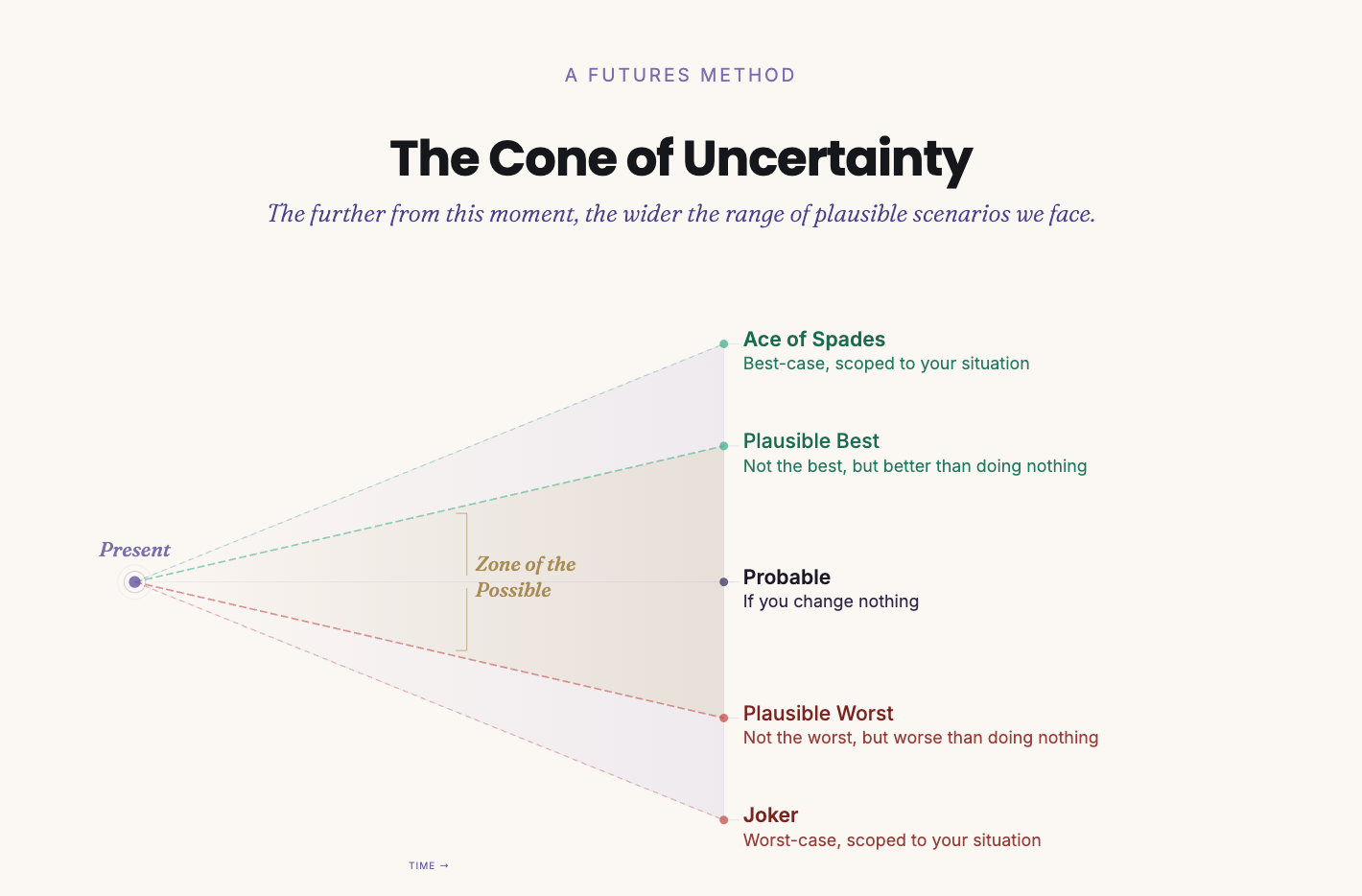
The exercise below guides us to set boundaries on the uncertainty and narrow our focus on the range of possibilities we desire or hope to avoid. I have adapted what might happen in a workshop or longer process into a series of writing prompts.
NOTE: I am not a therapist or mental health professional. If this could trigger complex feelings for you, please ensure that you have the support you need before beginning.
- Focus on a personal domain where you are unsure or a specific situation where you need to make a decision:
Personal domains
- Social
- Financial
- Health
- Housing
- Career
- Passions
Situation examples
- Is having kids the right choice for me?
- Is pursuing a master’s or doctorate the right path for me?
- Should I relocate to a new city or a different country?
- Making a choice between employment offers.
- I’m struggling to manage my finances.
- What decision should I make about this relationship?
- How should I spend my retirement?
- Pick a reasonable time horizon for your domain or situation. Five years is a good place to start if you are new to futures work. Anything less is easier to predict, and too far out gets harder to think through.
- Take the time to write in a place where you have the mental space to contemplate your answers. What you write is only for you. Don’t worry about grammar or spelling. I highly encourage writing by hand on paper. You are more likely to stay in the flow of your thoughts and access different parts of your subconscious by experiencing this exercise physically. Expect to spend 3 to 5 minutes per question.
- What future do you imagine if you change nothing about your life or situation? This is most probable with no action.
- What future do you imagine if everything goes wrong in your life or situation, like pulling a joker card from a deck of cards? This is not the time for you to catastrophise about an asteroid hitting Earth; it is the worst-case scenario scoped to your domain or situation.
- What future do you imagine if everything goes beyond right, the most ideal scenario, like pulling the Ace of Spades from a deck of cards? This is not waking up in a mansion next to your favourite celebrity; it is the best-case scenario scoped to your domain or situation.
- What future do you imagine between the probable and the Joker? This is not the worst, but not what happens if you do nothing.
- What future do you imagine between the probable and the Ace of Spades? This is not the best, but not what happens if you do nothing.
The Zone of the Possible
With a full cone of your future filled in you can see what is probable if you do nothing and that is plausible at the extremes. You have a more focused area of what is possible. Can the best-case or worst case things still happen? Yes, but if you aim high you have more chances of positive outcomes.
In the group who attended my session it was not unusual to feel more fear about the probable or slightly worse scenario than the worst case scenario. Whichever scares you the most is directional about which future you may choose to avoid, and whatever excites you the most is directional about which future you desire.
Do you feel less uncertain? Do you have any more clarity than when you started?
I find these answers to be helpful to refer to over time, to witness the change that happens when we take agency.
I hope you fear the future less now.
Make your desired future real
Here is one more writing prompt. You can do it anytime, but after re-reading your most desired scenario is best.
What we focus on is what we attract
Put on your most inspiring playlist or album. Describe a day in your life in the future you want to create. Where do you wake up? How do you feel when you wake up? Who is with you? What does your space feel and look like? Go into detail about how your day and evening feel, look, smell, and everything happening in that version of your life from the moment you awake to when you go to sleep.
This is you inscribing the life or outcome you most desire into your psyche.
Keep what you write and at whatever interval works for you, bring it out and read it. You can even send it as a letter to your future self using a tool like futureme.org.
Your present was someone else’s future
Standing in the Great Hall of Chateau Beduer, I asked the women who came to my session to pause for a moment and take in how we were living in Philippa, Leah, and Lynda’s future as our collective present. Four years ago, these women conceived an idea, a vision, of a place where women could gather for care and empowerment. Without them seeing and choosing a wildcard of a best-case scenario future, none of us would have experienced this magical week.
That vision inspired the actions they took to make Camp Chateau a reality.
And the women who came to my session have changed my future. They insisted I should offer the elective as a workshop for women lost in the fog of uncertainty. I am exploring how other futures methods could equip women with tools. There are so many solutions peddled to us, many often temporary band-aids for relief of symptoms instead of empowering women to change their own conditions. I want to teach women how to think critically about their futures.
I have found peace in studying narrative futures. I am often still afraid, but now I have the tools to find my way forward, to take action anyway. I have not always been the type of person who could travel alone to a summer camp in France.
In 2023, I was too scared to go to Camp Chateau alone, so my husband booked it as a surprise present for the next summer. In 2024, I deferred it a year because I was too overwhelmed by an international move (ok, I may have been scared, too). In 2025, I needed to travel the dates I had booked for a family wedding but I was growing into a woman who was more excited about going. And, in 2026, somehow I finally did it. And not only did I go, I was bold enough to teach a new class to a room full of humans on a whim.
I even got a badge for it.
Note: These types of trips are a privilege; a select few of us can afford the travel and time away. My husband’s gift of the trip, and his insistence that I take it even during an international move from Scotland to the Netherlands, is something I’m grateful for. This trip allowed me to meet so many amazing women. I’m not exactly grateful for the train delays, first from a boulder falling onto the tracks, and then from our train hitting a car which nosed too far onto the tracks at a railroad crossing. The people in the car are fine, though their vehicle is definitely not. In good news, a 2.5 hour trip turning into a 4.5 hour adventure means I wrote this before arriving in Toulouse.