Plant the Daffodils Anyway

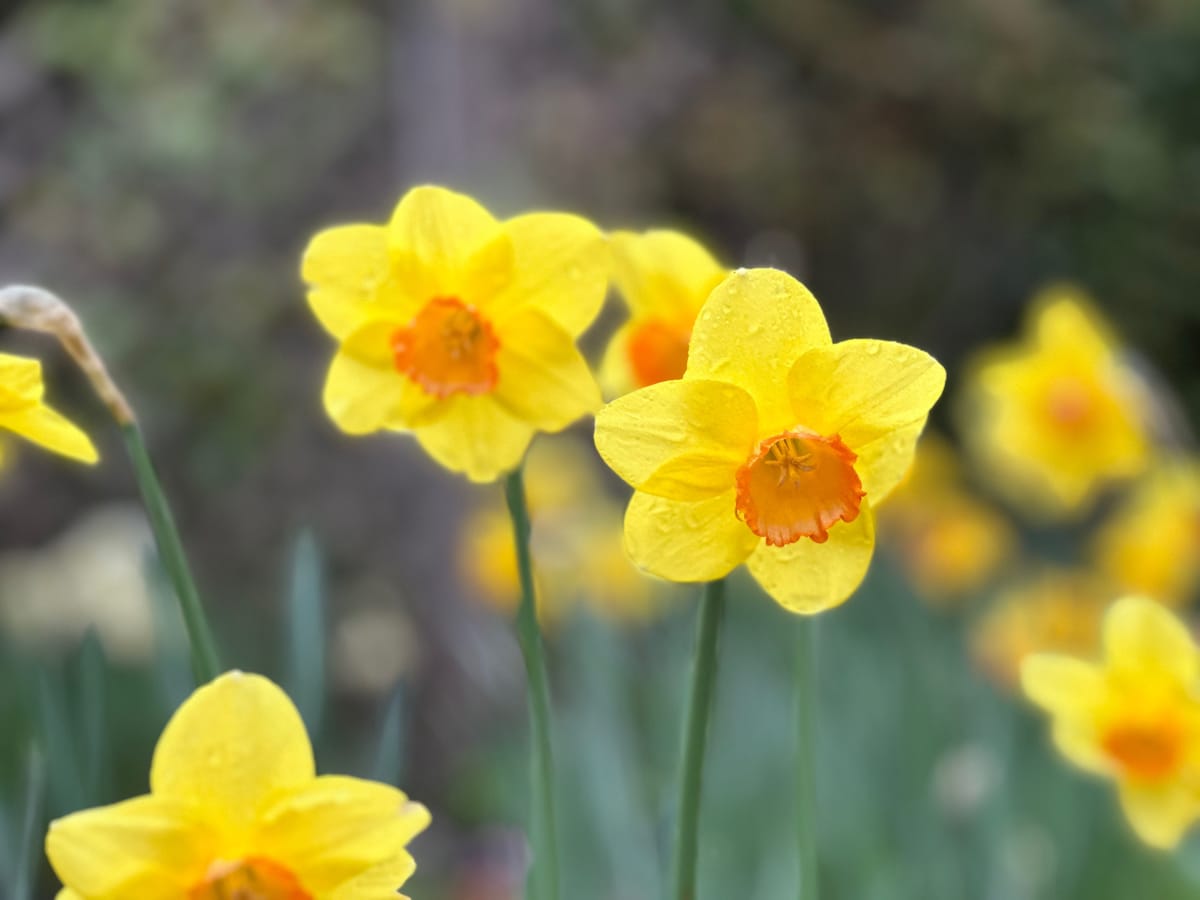
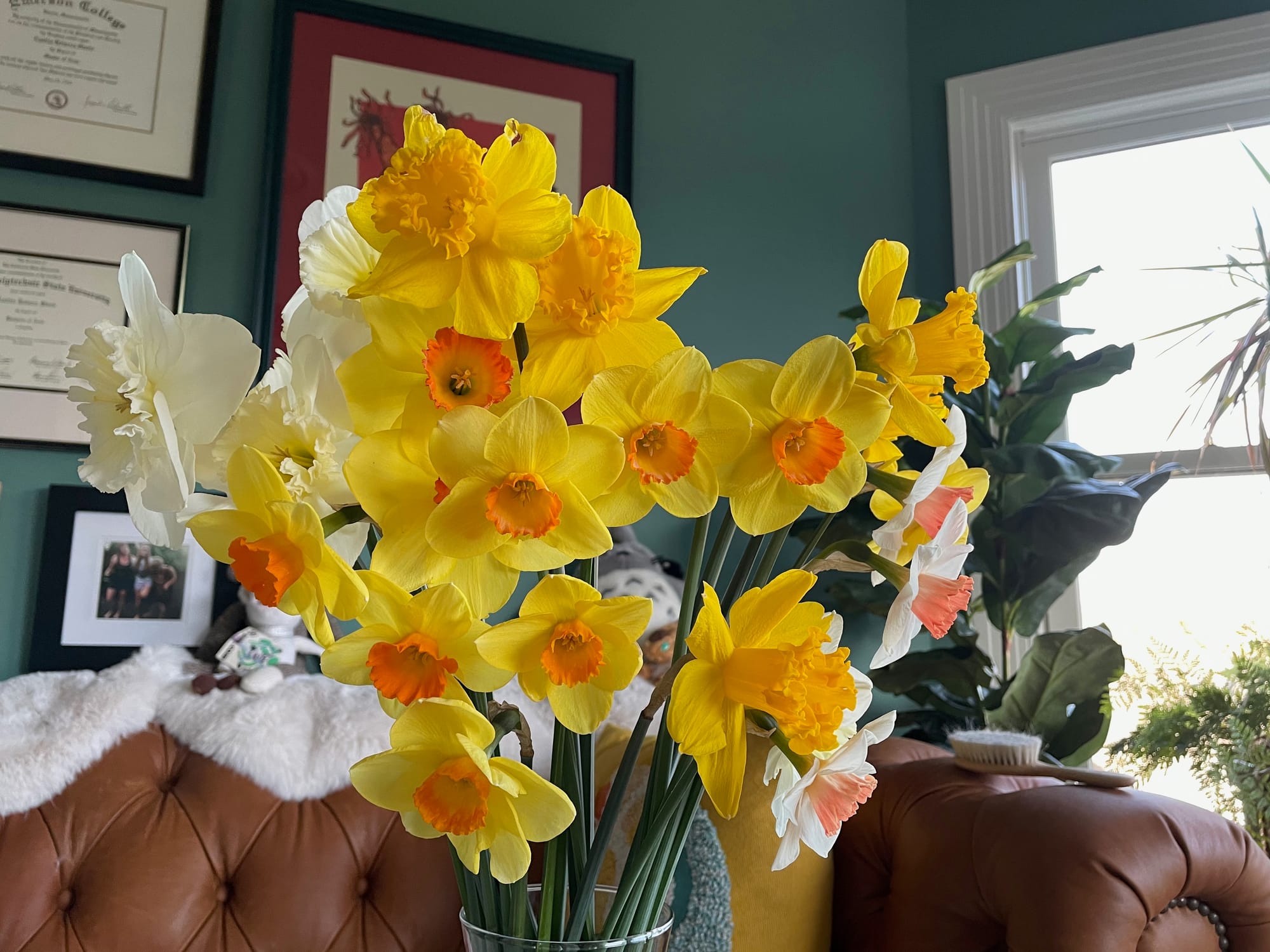
In spring in Seattle, bulbs were my March lifeline. During the greyest doldrums of winter’s wet retreat, my vast collection of daffodils and jonquils would appear first, like little sunshine bombs about to go off. Their bullet-shaped heads would nod down as they filled in before bursting up and out, searching for the sun with like-meets-like yellow-gold joy. April would bring tulips, like a crowd of shorter but better-dressed cousins: silky with stripes or ruffles in a dozen different shades.
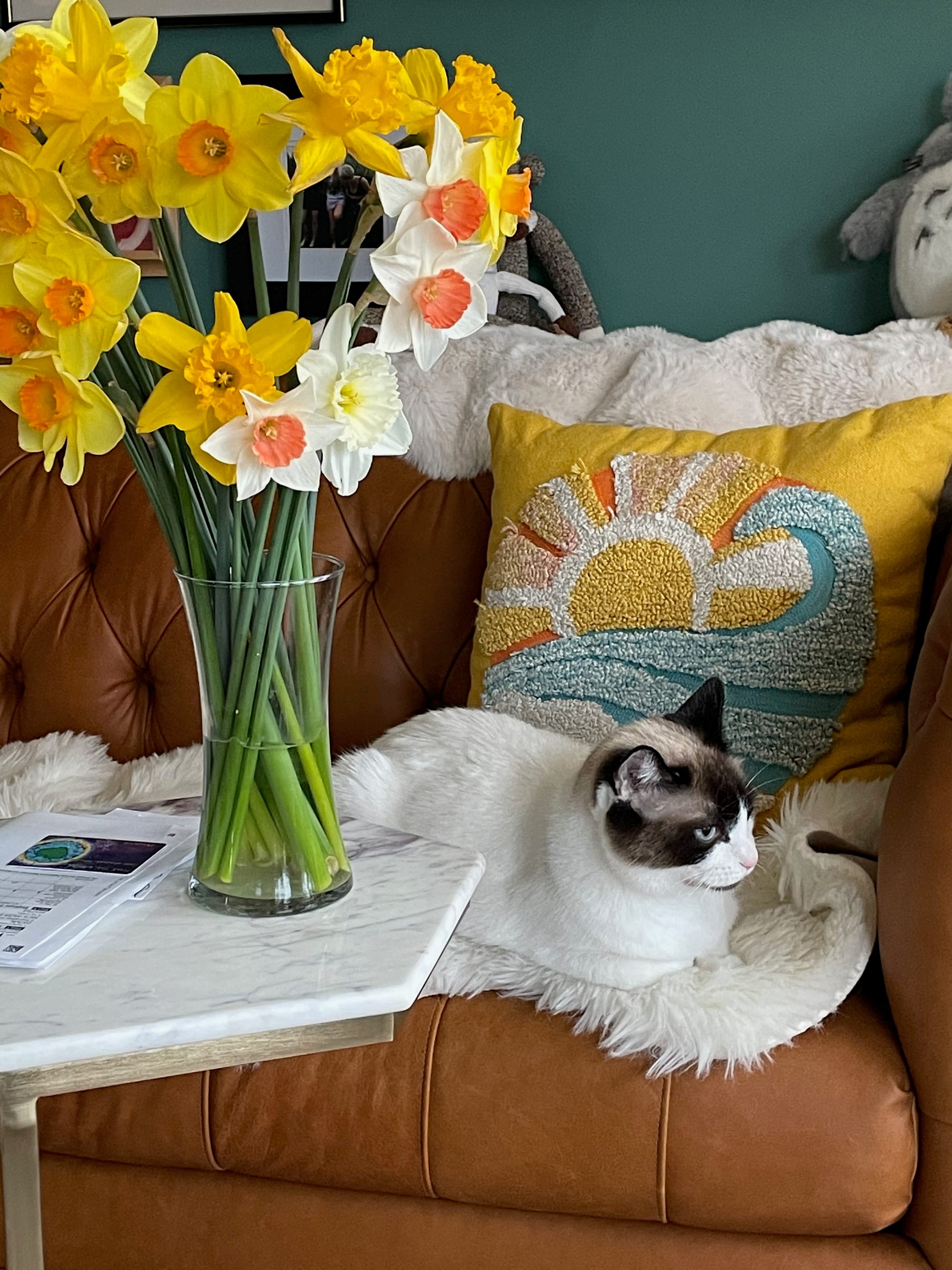
My Pacific Northwest lovelies, and Ed who was ambivalent to flowers.
We relocated to Scotland in 2024, and this fall was my first opportunity to plant bulbs. Our apartment is a rental, but the dividers between rooftop balconies are planters, primed and ready for a batch of bulbs. Our immigration status is up in the air, so I waffled about whether I should even invest in a few dozen daffodils to start. But I found a 6-month mix that promises a blend of daffodils that emerge continuously from February to August. I might not be here come May, but someone will, and why not delight them with flowers?
My spouse has an application in for a visa, which would allow us both to stay here in Scotland. There is a good chance we will get it and build a life here. There is a possibility my spouse won’t get it, but I can apply then. There is a chance I won’t get it. Scotland feels like home to me in a way I didn’t expect. I want so deeply to spend every spring and summer here, watching wave after wave of daffodil varieties bloom. I want to hibernate each winter by a fire, in this verdant and delectable country.
My bulbs arrived just as we were leaving for a weekend away, the first of three trips in a six-week span. We went to the Netherlands first, not for leisure but to understand our backup plan: to map the practical shape of leaving this place we’ve come to love if the visa doesn’t come through. Then the highlands for the Jacobite Train, and then Italy to speak at a conference. Each time I came home and saw that box in the hallway, I felt a small stab of guilt. The bulbs were warming like brownies in an Easy-Bake oven while I was out imagining futures, plural, instead of tending to the one I wanted most.
Six weeks passed before I finally got them in the ground. Should I have thrown them away? Surely many were ruined. But not putting them in the earth was the only way to guarantee failure. How often do we apply this perfectionist principle to so many things in our lives? The investment is too small to matter. I probably won’t get into that competitive program anyway. We convince ourselves we’ve already waited too long for something to work the way we imagined it would. I decided to go ahead and hope for the best. I mixed in rich composting soil with what was already in the planter and got to it.
I just finished a semester studying Futures Methods, and one thing has lodged itself in my mind: there isn’t a single future lingering in wait for us. There are myriad possible tomorrows, and our actions now help shape the most likely ones. We can forecast what might happen and work toward what we hope to bring to fruition, or at least avoid. Standing on that balcony with the bulbs in hand, I wasn’t choosing between staying and leaving. I was choosing which trajectory I wanted to bring to fruition, inhabiting the life I wanted to summon rather than hovering in the liminality of never really living.
As I pressed each bulb into the soil, I held the uncertainty they represented. These bulbs might flower while I’m thousands of miles away, missing the spring I’d dreamed of. Or they might not break from the soil at all. Or, and this felt like the truest possibility, some would bloom, imperfectly, and that would be enough. Not the outcome I’d planned, but a future nonetheless. What if my April would be better in Leiden, watching the tulips showboat?
Not planting the bulbs would guarantee zero spring blooms. Tucking them into damp earth meant someone might benefit—even if that someone isn’t me.
As a form of narcissus, daffodils are a bulb that multiplies over time. It only takes one to bloom, which can be split during dormancy and replanted as multiple flowers. I know it is possible that none of the flowers will arrive. I may have waited too long to get them cosy in the soil. But even if just a few bloom this spring, there is always next spring.
Plant the daffodils anyway and see what blooms, my lovelies.