On Extraction and Innovation: Startups Aren’t Bee Colonies


The first time I approached a beehive, I was nineteen, dressed in a crisp new white bee suit at Cal Poly’s apiary, smoker in hand for my beekeeping class. Dozens of stacked brood boxes stood out in the orchard on the northwest corner of campus. The roar of a million bees is not something you forget.
It took me a few decades, but in 2021, I finally got two hives in my Seattle yard. Though let’s be honest; I got a beekeeper named Dave who hosted two hives on the eastern side of my garden. I was too busy working as a design leader at Atlassian across Trello, Jira, and Confluence to tend hives myself. But I knew enough from that Cal Poly class to understand what I was paying for: someone to care for the hives who thinks in multi-year timescales about colony survival, not quarterly extraction targets. Dave loves his bees.
Which brings me to Steve Yegge’s recent piece about Anthropic’s “hive mind.”
Steve’s pattern recognition is characteristically sharp. His observations about golden ages at Amazon and Google ring true. But when he reaches for the hive metaphor to describe Anthropic’s “vibe-driven” organisation, he’s describing something that would make my beekeeping professor wince. Not because the metaphor is wrong, exactly. Because it’s more accurate than Steve intends, and it reveals why this model fails when a harsh winter comes.
And I can’t help but cross-pollinate this with Mrinank Sharma’s resignation letter. In early February 2026, Sharma, an AI safety researcher who’d worked on some of Anthropic’s most important safety mechanisms, resigned. In his departure letter, he wrote: “The world is in peril. We appear to be approaching a threshold where our wisdom must grow in equal measure to our capacity to affect the world, lest we face the consequences.” He’d seen “how hard it is to truly let our values govern our actions…where we constantly face pressures to set aside what matters most.”
That’s not an outsider critiquing the hive. That’s a bee that was inside, doing critical work, who left and wrote a resignation letter so carefully elliptical it reads like someone who signed an NDA but couldn’t stay silent. The pressures to optimise for the wrong things, it seems, became untenable.
What hives do (and it’s not vibes)
That roar I heard approaching the Cal Poly apiary as a nineteen-year-old? That was 50,000 bees per two-deep brood-box hive, running on protocols so precise that it took Karl von Frisch a Nobel Prize level of work to decode them. The waggle dance isn’t improvisation. It’s one of the most complex symbolic communication system humans have decoded, after human language. Bees encode direction using the angle of their body relative to the sun, or to gravity on a vertical comb, when it’s dark inside the hive. They encode distance through the number of waggles, quality through enthusiasm. When it’s cloudy, and they can’t use the sun as a compass, they navigate by polarised light using special photoreceptors. Yes, I am fun at dinner parties.
Back to bees… This is not “Yes, and…” improv theatre. This is syntax.
Bees without proper tutoring during a critical early period make errors that persist throughout their lives. Like human language acquisition, there’s a window. Miss it, and you’ll never encode distance correctly. The “dance dialects” Steve might read as cultural variation are learned adaptations to local environments, passed down through social learning. Not vibes. Precision refined over 100 million years.
The chemical communication is even more rigid. Queens produce pheromones that guide the behaviour of all other bees through actual molecular gradients. If the queen is removed from a hive, the entire colony knows within fifteen minutes, not through gossip, through chemistry. The colony maintains 92–93°F (33–34°C) in the brood nest, whether it’s 110°F (43°C) or -40°F (-40°C) outside, using metabolic heat generation and coordinated wing-fanning that would make any HVAC engineer jealous.
Steve celebrates Anthropic employees for achieving “the death of the ego.” But bee specialisation isn’t about ego death: it’s about optimisation for collective fitness. Young bees nurse. Middle-aged bees build comb and process nectar. Older bees forage and die outside the hive, where their corpses won’t contaminate the colony. A small percentage of middle-aged bees are genetically compelled to become undertakers. Scout bees are wired for risk-taking. When bees change roles, they first change their brain chemistry. When ageing bees take on younger bee tasks, their brains literally age in reverse. This is deterministic role allocation serving the survival of the super-organism.
A thing I love about bees is that no two hives are identical. My last year in Seattle before I moved, I got two wildly different honeys from my two hives. One was pale gold, glooping lazily across the glass jar when held up against the light. The other was a deep, dark, viscous output from my lavender plants, almost molasses-like yet delicately fragrant. Same garden. Same beekeeper. Same management protocols. Different hives made different choices about which flowers to prioritise, and you could taste those choices in the final product.
I’m not interested in the homogenised syrup-like products sold in plastic bear shapes in the supermarket after tasting what actual bees produce when they’re allowed to be different. And I’m not interested in organisational models that treat humans as interchangeable resources optimising toward identical outputs.
A thing that bothers me most about the hivemind romanticisation: real hives optimise for hive survival and reproduction. Everything—the precise dances, the chemical gradients, the age-based specialisation, the miles a bee would need to fly to make one pound of honey—serves colony fitness. Honey isn’t a commoditozed product to bees.
I’m not even sure these AI hiveminds are making a form of honey. Honey is a survival store, built slowly, consumed by those who made it. What AI companies are producing looks more like high-fructose corn syrup: engineered for maximum value extraction, optimised for the distributor rather than the consumer, and bearing only a passing resemblance to the thing it’s replacing. We put it in everything and wonder why we feel sick.
When Steve talks about Anthropic’s “hivemind,” I keep waiting for him to ask: what is this hive optimising for?
Mrinank Sharma seems to have asked himself that question. In his resignation letter, he wrote about wanting “to contribute in a way that feels fully in my integrity, and that allows me to bring to bear more of my particularities.” He’d achieved significant safety work at Anthropic: understanding AI sycophancy, developing defences against AI-assisted bioterrorism, putting those defences into production. But he left anyway, because the fitness function was wrong.
Steve describes the hivemind as self-regulating through vibes: “if you interfere with the hive mind operation, upsetting that balance, you’ll gently be pushed out to the edges.” But what counts as “interference”? Apparently, asking whether the organisation’s stated values match its actual priorities.
I’ve been pushed out of a startup before for challenging things like how tracking pixels were integrated with Facebook. I know how this goes. The vibes don’t just coordinate work; they enforce conformity to an unstated fitness function. And when someone notices the mismatch, the hivemind doesn’t engage with the concern. It just spins them to the periphery and calls it natural selection.
The golden age is ecological, not organisational
Steve correctly identifies that Amazon, Google, and now Anthropic all shared a critical condition during their golden ages: more work than people. When work exceeds people, you get innovation. When people exceed work, you get politics. I watched this play out at Atlassian. It’s real. But what he treats as an internal organisational achievement is impacted an external ecological condition: the field and the flowers.
My first year with the hives, Dave warned me that I likely wouldn’t get any yield directly from my hives. He’d supplement from his other clients, so I’d still get my precious jars. My pandemic hobby had been gardening, and I’d gone big on pollinator plants the autumn before, filling the space in front of the hives with a buffet of allium, rosemary, thyme, and lavender, lavender, lavender. Dave and I were both equally surprised when both my hives created an abundance of honey that year. Enough to harvest and still leave them plenty for winter.
It wasn’t the only the hives themselves. It was the environment they had access to.
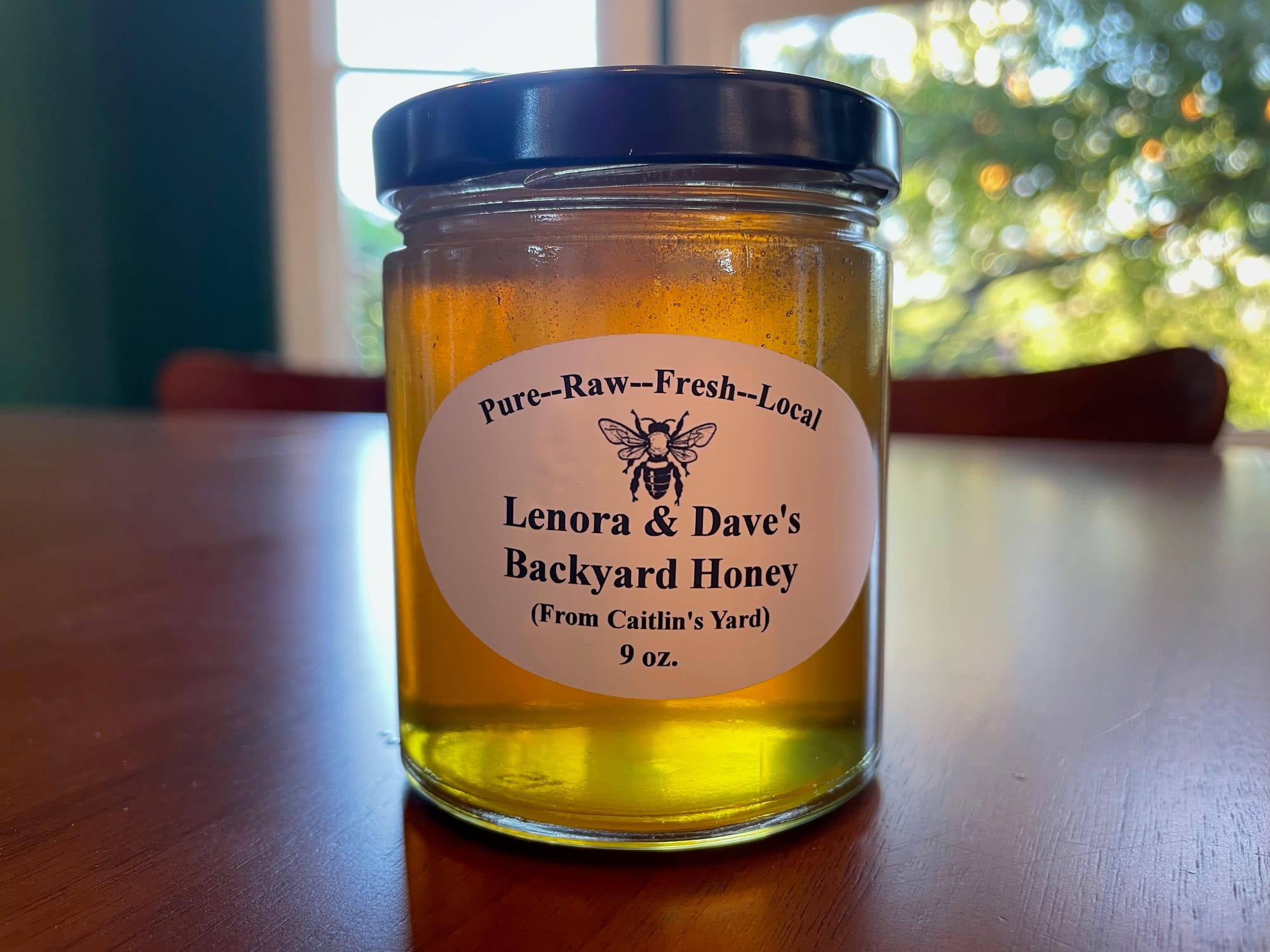
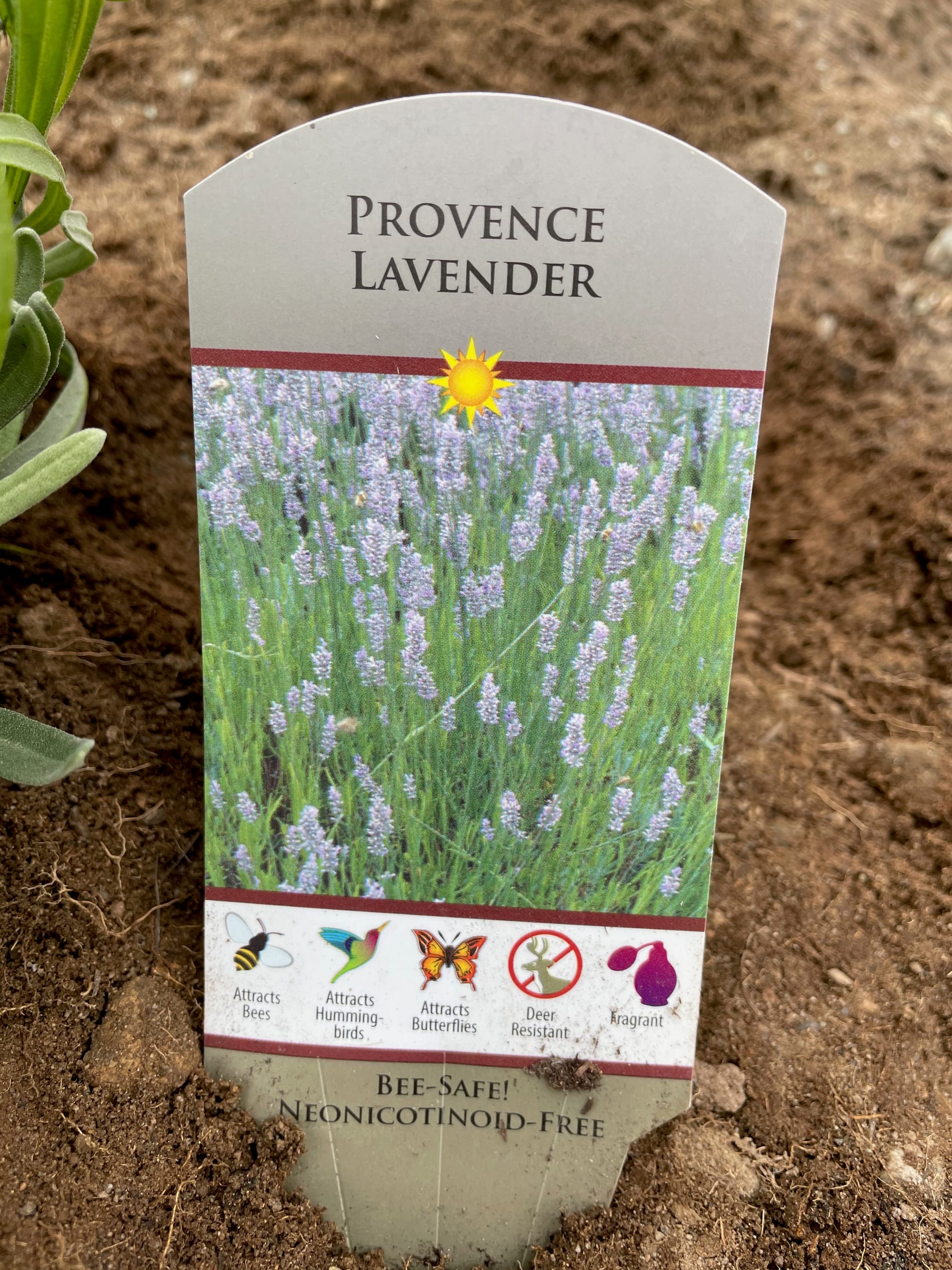
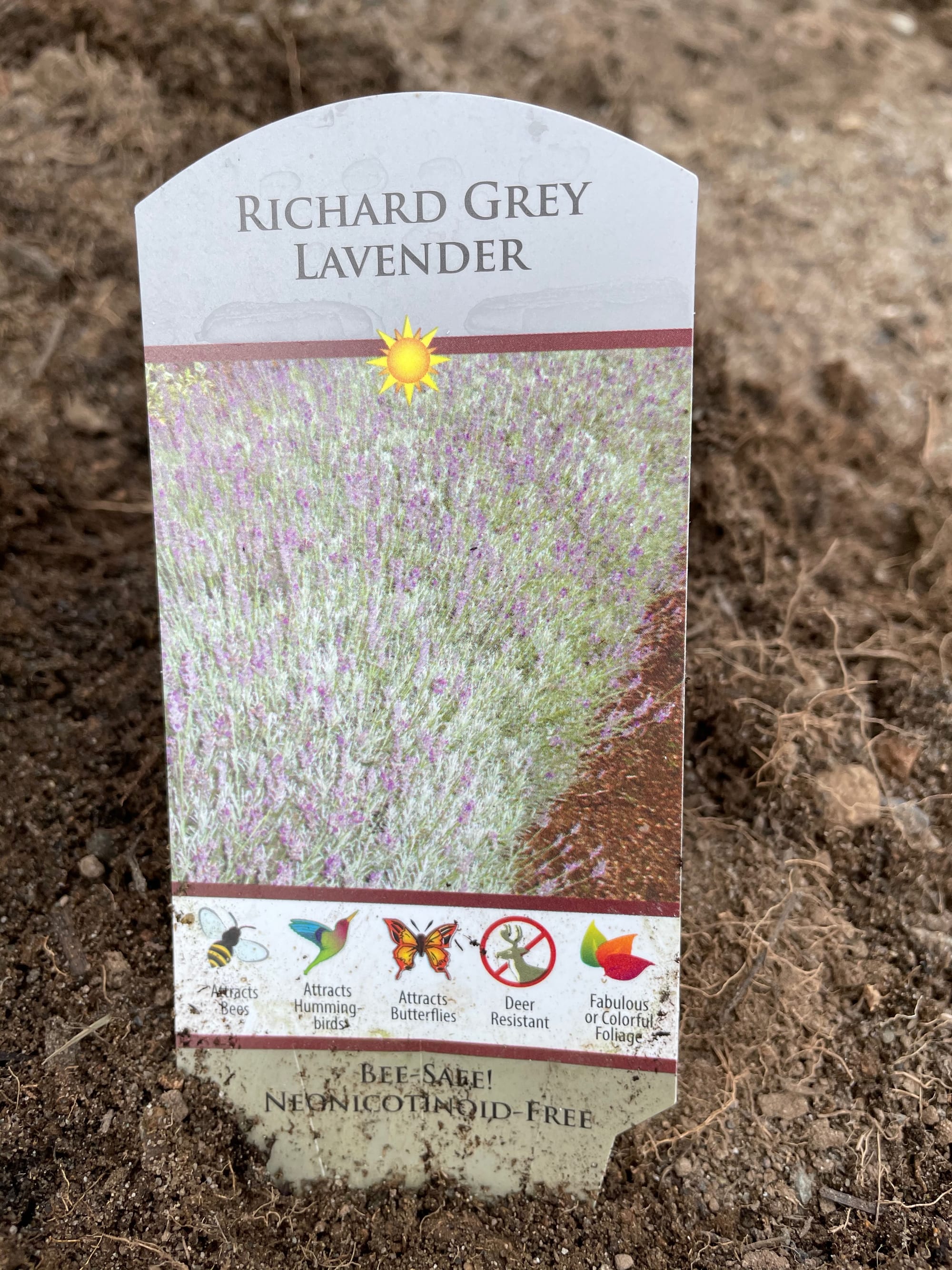



I said I planted a lot of lavender.
A bee colony can be perfectly organised—precise dances, optimised role allocation, sophisticated communication—and still fail if there aren’t enough pollen. The meadow determines the hive’s success more than the hive’s internal organisation does. I planted well. My bees thrived. Dave’s clients without pollinator gardens? Their bees struggled. This is what Steve misses about Amazon, Google, and Anthropic.
Amazon’s golden age happened because it had early e-commerce as a greenfield with no real competitors. Google’s golden age happened because web search was new and advertising inventory was expanding exponentially. Anthropic’s golden age is happening because they’re ahead in AI usability and interaction design, whilst the market is flooded with funding.
These aren’t reproducible through organisational structure. They’re the economic equivalent of a California super bloom. I can’t take my hives’ success in 2021 and turn it into a management methodology. I got lucky with timing and planting. Dave’s expertise mattered, sure. The hives’ organisation mattered. But without that buffet of flowers in front of them? None of it would have been enough.
A thing about bee ecology that Steve’s metaphor accidentally captures: summer bees work themselves to death in six weeks when flowers are abundant. Winter bees live nine months when resources are scarce. The strategy changes based on external conditions, not internal culture. When Steve celebrates Anthropic’s “vibes” and working cycles, he’s describing summer bees in a field of endless allium. But he’s claiming this is solely reproducible organisational innovation. It’s not. It’s just what happens when resources massively exceed consumption.
The question isn’t “can you build a hive mind?” The question is “what happens to your hive mind when the environment changes around the hive?”
Who’s eating the honey?
I paid Dave $610 a year to maintain two hives in my Seattle garden. I got twelve 9-ounce jars each season: 108 ounces total. Two healthy hives produce between 100 and 150 pounds combined, which is roughly 1,600 to 2,400 ounces. I got less than seven percent of what those hives produced. Those were very expensive jars if I only measured in ounces. I got endless satisfaction watching them stream in and out of their red brood boxes on sunny days, and in knowing my neighbourhood was benefitting as a whole.
Dave left the bulk of the honey for colony survival and maintenance. Not because Dave is a particularly generous person (though he is). Because taking more than that weakens the colony going into winter, and a weak colony in autumn is a dead colony in spring. This is the core biological constraint Steve’s metaphor keeps bumping into: you cannot ask bees to optimise for beekeeper profit over colony survival. A colony that prioritised honey production for humans over winter stores would die.
But Steve’s model requires exactly this inversion. “Everyone knew they’d be billionaires” is optimising for extraction. The goal isn’t colony survival: it’s investor returns. Employees are promised honey, but only if they help extract maximum value. “Spending tokens” becomes the success metric, which is a fascinating way to describe burning through resources.
Each individual honeybee makes 1/12 of a teaspoon of in its lifetime. It takes 60,000 bees visiting 2 million flowers to make one pound. A bee would need to fly 55,000 to 90,000 miles to produce that pound. The work is real. The energy expenditure is measurable. And the bees aren’t doing it for the beekeeper.
When I watched Dave open my hives to check stores and assess colony health, he was not optimising for maximum honey extraction. He thinks in multi-year timescales. He manages for colony strength. Because his business model requires colonies that survive and reproduce, not colonies that produce maximum honey once and then collapse. What is any of these AI company’s business model? And whose survival do they prioritise?
When Mrinank Sharma wrote about the “pressures to set aside what matters most,” he was describing exactly this tension. The pressure isn’t coming from cartoon villainy. It’s structural. It’s what happens when the organisation optimises for one fitness function (investor returns, capability advancement, market dominance) whilst telling workers they’re optimising for another (AI safety, human flourishing, responsible development).
What we might learn if we studied actual bees?
Look, I’m not anti-technology or anti-AI or anti-Anthropic even. Claude helped me fact check this essay, and kicked the tires on my grammar. I was on the founding team at MasterClass. I understand the exhilaration of building during a golden age. I’ve felt that crackle of electricity Steve describes. But if we’re going to learn from hives, let’s learn from actual hives.
The thing Steve’s SageOx friends stumbled onto (continuous broadcast of state, full transparency of work stream, everything versioned and visible) is genuinely hive-like. Bees don’t hide their work because transparency serves a collective function. The waggle dance happens in public. But here’s the hard part: this only works if everyone shares the same fitness function.
Bees broadcast because it serves colony survival. Every bee watching a waggle dance is processing the same question: Does this help the colony survive and reproduce? The answer determines whether they follow the dancer to the food source. In companies, transparency often reveals misaligned incentives. Make all work visible, and you discover: executives optimising for exit, engineers for craft, product for metrics, finance for margins. “Death of the ego” only works when everyone’s ego is aligned with the same outcome.
Chemical signals work in hives because they’re physically constrained: you can measure pheromone concentration. Waggle dances work because they encode actual vector information that followers can decode and verify. What’s the equivalent in Steve’s vibe-driven organisation? How do you know if the vibes are working? What’s the error rate? What happens when someone’s vibes are badly calibrated?
I don’t think the Agile methodologies popular the last 15 years are relevant anymore, and that is why everyone is obsessed with vibe coding. I’m not arguing we stick to outdated ways of working, but we do need to find a new way forward. I’ve been developing a paper that abandons bees entirely—for city planning, of all things. The core idea: what if we designed organisations less like hives and more like cities? Not unified by a single fitness function, but held together by zoning laws, tolerance specifications, and explicit negotiation between competing interests. I’ll be presenting it in Dublin next year. For now, I’ll just say: maybe the problem isn’t that we lack a hivemind. Maybe it’s that we keep reaching for biological metaphors when infrastructural ones would serve us better.
When the flowers stop blooming...
Steve’s answer to whether “vibe coding” can scale is basically: yes, look at Anthropic. But Anthropic is in year three of a golden age with near-infinite funding and a capability advantage in a rapidly expanding market. We haven’t seen them face resource constraints yet. Have you checked the stock market response to AI funding in the last week? It is not up and to the right.
Ask a hundred people if an AI bubble is coming, and you’ll get a hundred different answers. I’m no prophet or expert, but something in my bones tells me that two things can be true at the same time: AI has changed our world irrevocably, and the winter of AI optimism is coming in the form of a market correction and reckoning. I don’t know how big it is or when it will happen. But listening to the bees at the heart of the hive, there’s a concerned undertone to all that buzz.
Mrinank Sharma heard a different tone, the danger of the hive to the world. “The world is in peril,” he wrote. “We appear to be approaching a threshold where our wisdom must grow in equal measure to our capacity to affect the world, lest we face the consequences.” That’s not paranoia. That’s someone who spent two years inside the organisation, working on critical safety mechanisms, and left because he could see what was coming.
It’s worth remembering that the “killer bee”—the Africanized honey bee—was the result of human intervention: a 1950s breeding experiment in Brazil aimed at creating a hardier, more productive honey producer. It escaped containment, spread across two continents, and became one of the most cited examples of what happens when we optimise for output without understanding the system we’re changing.
What happens to the bees?
When Dave opened my hives to check stores, he was making a calculation I saw my professors make back at Cal Poly: how much honey can we take without weakening the colony? How do we keep this system alive and productive for years, not quarters? Good beekeepers, like good leaders, think in multi-year time scales. They manage for colony health, not maximum extraction. They understand that you can’t take maximum honey every year and expect colony survival.
In the winter of 2023, Seattle suffered a devastating ice storm. One of my hives made it. The other did not.
The failed hive emerged from the storm with a literal pile of dead bees on the ground outside. The bees had done their best to keep moving, to work their way through those freezing 48 hours. By the time I visited the hive, the tidy-minded workers had already carried out the bodies of their exhausted colleagues. It isn’t the same, but it reminds me of redundancies. The desperate attempts to save the hive. The workers who keep showing up, keep generating heat, keep moving even as their colleagues drop. The cleanup after, when the survivors must clear out who didn’t make it.
Dave and I talked about what went wrong. Had that hive been weaker going in? Was it just bad luck, the spot where that hive sat got hit harder by the wind? We couldn’t know for sure, except winter in Seattle can be tough on bees. But one thing was clear: the bees had worked themselves to death trying to survive a winter they weren’t prepared for. They didn’t sacrifice themselves for some transcendent vision of the superorganism. They worked until they couldn’t work anymore because that’s what their biology compelled them to do, and the environmental conditions were harsher than their reserves could handle.
When I see tech workers during these continued waves of layoffs—still shipping features, still taking meetings, still trying to prove their value whilst colleagues are being walked out—I think about that pile of dead bees. The ones who worked themselves to exhaustion trying to save something that was already failing. The tidy-minded survivors are clearing away the bodies and carrying on. When layoffs happen it isn’t “the company” as some murky entity choosing which not-yet-dead bees to throw out into the cold; it is fellow employees, be they HR or executives. Those humans represent the company and its interests, but they do the act.
Steve’s metaphor wants hives to be reproducible innovation machines. But my hives taught me they’re complex adaptive systems responding to ecological conditions, producing unique outputs based on circumstances no one fully controls. The bees in my hives didn’t work for me. Dave and I participated in a system that required us to care about their survival as much as our own benefit. We left them enough honey. We treated them for mites. We did what we could. But sometimes winter is just too harsh, and no amount of individual bee effort can compensate for systemic vulnerability.
If you ask bees to optimise for beekeepers instead of colony survival, you get dead bees. If you ask workers to optimise for investors instead of organisational survival, you get burnout and collapse. And when winter comes, and winter always comes, the question isn’t whether your workers tried hard enough.
What are we optimising for, and who benefits when we succeed?
If it’s sustainable value creation that serves all stakeholders, including the workers doing the building, then maybe there’s something to learn from hives. Study the actual protocols. Recognise that specialisation only works when goals align. Build systems that can survive winter, not just extract maximum value during summer.
But if it’s maximum extraction before winter comes, if it’s spending tokens and chasing billion-dollar exits whilst calling it innovation, then Steve’s metaphor is doing exactly the work it should. It’s revealing what we’re building and why it fails.
Mrinank Sharma made his choice too. He left Anthropic to explore “writing that addresses and engages fully with the place we find ourselves, and that places poetic truth alongside scientific truth as equally valid ways of knowing.” He’s planting different gardens now, asking different questions. The ones, as he quoted David Whyte, “that have no right to go away.”
I have been asking my own questions. The divergence between what tech companies say they value and what they do became a gap too large for me to reconcile. I still love building software products and the passionate people who show up each day looking to improve the world and how we interface with it. But I’ve shifted how I do that work. My practice now centres on Object-Oriented UX—helping teams define the fundamental objects in their systems before anyone starts drawing screens or writing code. It’s the opposite of vibes: explicit structures, named relationships, tolerance specifications that tell you when you’ve drifted out of bounds. But it gives teams agency and the space to be innovative at scale while building in the same direction.
And I’m studying Narrative Futures at the University of Edinburgh, asking how the stories we tell about technology shape what we build and who it serves. The hivemind is one of those stories. So is “move fast and break things.” So is “we’re all going to be billionaires.” I want to understand why we keep reaching for narratives that obscure extraction, and what it might look like to tell different ones.
To paraphrase Vivienne Castillo, commerce doesn’t have to be capitalism. We can create and exchange value without extraction as the end goal. We can keep the bees healthy and happy and still sell honey at the farmer’s market.